

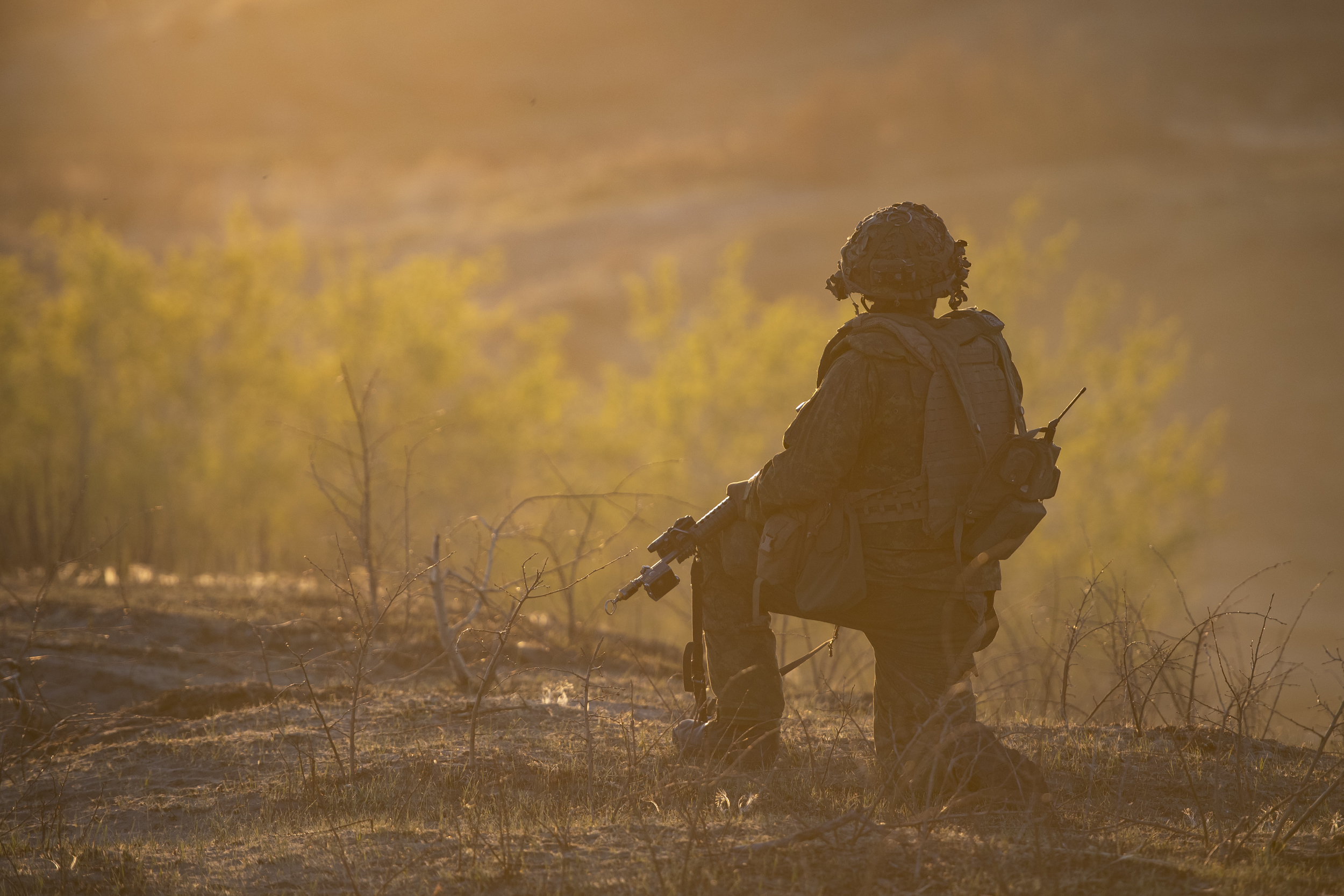
Photo: Cpl Rachael Allen, Canadian Forces Combat Camera, Canadian Armed Forces
A soldier of the 2nd Battalion, Princess Patricia’s Canadian Light Infantry, acts as the enemy force, before the final firefight during Exercise MAPLE RESOLVE in the 3rd Canadian Division Support Base Detachment Wainwright, Alberta on May 10, 2021
Dr. Stephen M. Saideman, Paterson Chair in International Affairs at Carleton University, Director of the
Canadian Defence and Security Network.
Dr. Stéfanie von Hlatky, Canada Research Chair in Gender, Security, and the Armed Forces at Queen’s
University, Co-Director of the Canadian Defence and Security Network and Fellow, Centre for
International
and Defence Policy.
In the Summer 2023 issue of the Canadian Military Journal, the co-directors of the MINDS Collaborative Network Grant Transforming Military Cultures (TMC) curated a collection of articles on changing the culture of the Canadian Armed Forces. Drs. Maya Eichler, Nancy Taber, and Tammy George received much more attention than most CMJ issues receive, going well beyond the expected scholarly exchanges between academics and practitioners. The co-editors of this issue have been the target of vitriol for suggesting that critical theories can offer insights in support of CAF culture change efforts. Let there be no doubt, however, that while the Department of National Defence produces CMJ, it operates independently and holds all submissions to a double-blind peer review process. It is important to protect this space for respectful dialogue between civilian and military experts.
Addressing the past and current problems that have harmed many of those serving in our military can be provocative, and we live in a time where conversations, academic or otherwise, about race, gender, discrimination, and the legacies of the past can be quite heated. We support the co-editors and contributors of the special issue for not shying away from the challenge of introducing ideas they no doubt knew would elicit strong reactions. Indeed, the vocabulary of feminism and critical theories that focuses on exposing and dismantling structural inequalities can be triggering to those who see no problem with the status quo. This should not distract the security and defence community from engaging with the core contribution of the special issue, which is to show how anti-oppression frameworks drawn from critical theories can inform strategies for culture change in the CAF. We may or may not agree with every word in this issue, as academics rarely see eye to eye, but the freedom to engage in critical thinking is essential not just for a free society but for a more effective military. Just as every military exercise or campaign should have a lessons-learned process afterwards, every democracy is better off for having a vibrant conversation with academics pursuing their ideas freely.
We wrote this letter to demonstrate the need for the CAF to change its culture, to demythologize existing efforts and the broader conversation about diversity, equity, and inclusion, to consider some of the resistance to culture change, and to explain the importance of academic exploration in democratic civil-military relations.
There are at least three reasons for the CAF to change its culture: to better reflect contemporary Canadian society, to reduce or repair the harm done to current and former CAF members, and to broaden the recruiting pool so that the CAF can reverse its personnel crisis by attracting Canadians from all walks of life.Footnote 1 The military recognizes the need to change the CAF’s culture, rather than just launch a short-term operation to “fix” the sexual misconduct problem. It has stood up a key agency—the Chief of Professional Conduct and Culture—to head these efforts. Retired Supreme Court justices have repeatedly recommended not just tweaking a few institutions,Footnote 2 but changing norms and values, the shared understanding of appropriate behaviour—that is, the culture of the military. Defence Ministers have committed to these recommendations, and there are different mechanisms to hold their progress to account, like the appointment of an External Monitor, as stipulated in the Arbour Report. The CAF needs to change and continue to adapt, so we will not relitigate the point here.
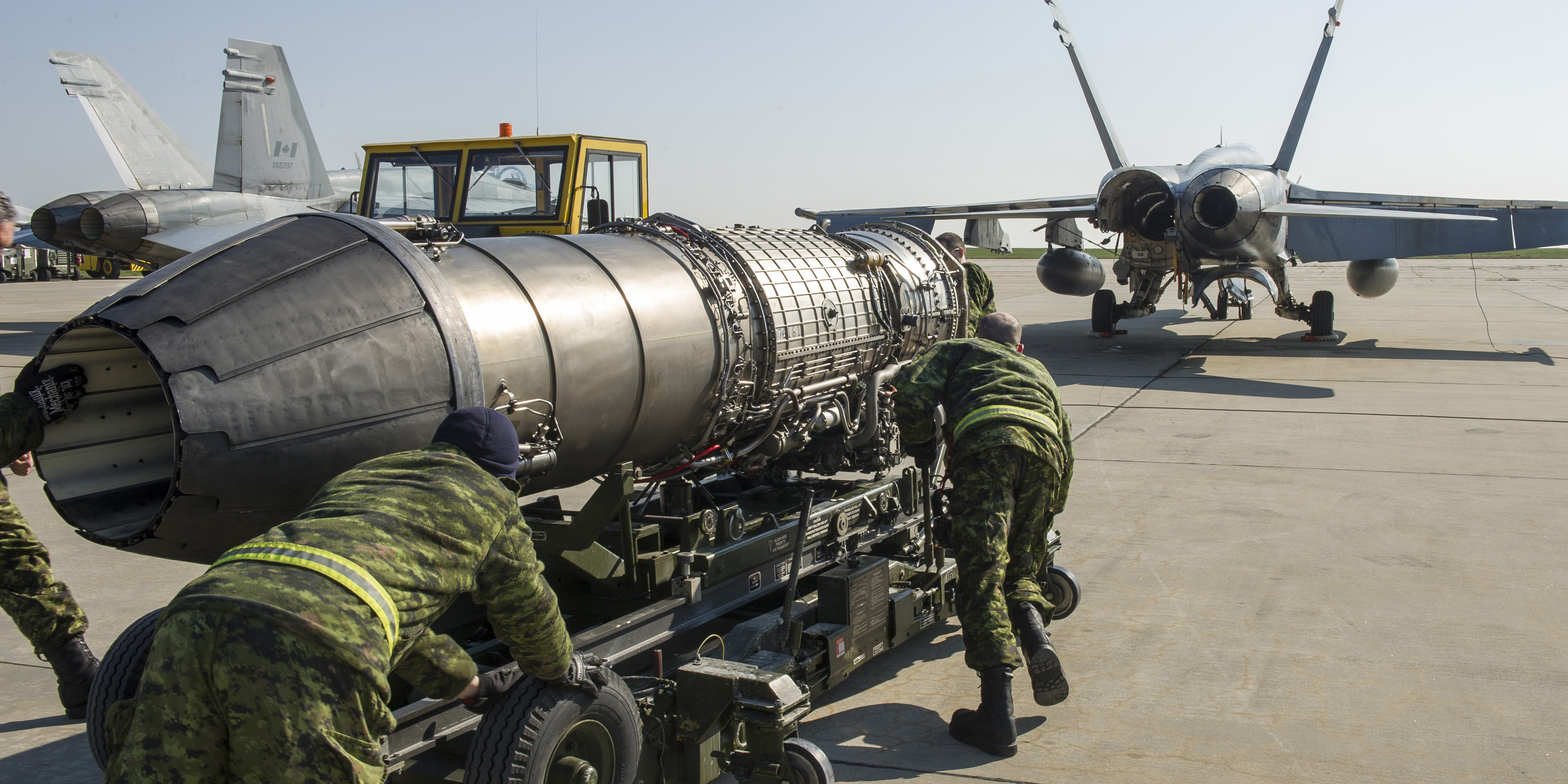
Photo: MS Steeve Picard, 3 Wing Bagotville BN03-2016-0125-021
Technicians from Air Task Force-Romania change one engine on a CF-188 Hornet in Constanta, Romania during Exercise RESILIENT RESOLVE on March 17, 2016
This brings us to the special issue and the terms that critics of culture change find so upsetting—feminism, critical race theory, and diversity, to name a few. While critical race theory has become a slur in American politics, something used to justify removing references to racial injustice from history books, the CMJ special issue recognizes that the military used to be run entirely by white men and largely excluded others from powerful positions. In the introduction, Drs. Eichler, George, and Taber argue: “Culture change requires not just addressing sexual misconduct or homophobia or racism or the legacies of colonialism, but understanding them all as interrelated root causes of the military’s culture problem.” This approach is at the heart of TMC, from which the special issue emerges as one of the key contributions. To support this position, the contributors rely on the root causes, lived experiences of racialized military personnel, contested military identities, familial norms, critical feminist education, and trauma-informed pedagogy as they relate to transforming military cultures (p. 4).”Drs. Eichler and Brown start with an article that shows how critical scholarship can provide a different take on the root causes of sexual harassment, assault, and abuses of power in the military. Dr. George shifts gears to assess how lived experiences measure up to such analytical frameworks, highlighting the work performed by racialized members who must constantly negotiate and adjust to an institution that is rigidly rooted in traditions and customs. Belonging, in that context, can be arduous and alienating. In another article, Dr. Taber grapples with questions that are critical to the implementation of the new CAF ethos and supporting doctrine relevant to the profession of arms. She makes the case for critical education as a necessary component of how members of the armed forces can transcend the antiquated “warrior ideal” (p. 31). It is antiquated partly because CAF members in the 21st century must be proficient in much more than the use of force. In today’s complex environment, adaptation and challenging the status quo are essential, which makes critical education and learning crucial for military leaders who strive to meet the challenges of the modern battlespace, at home or abroad. Dr. Davis presciently noted, commenting on her own military experience, “When we are confronted with a new perspective that challenges our identities and understandings of the world, we look for flaws and ways to discount or undermine that new information or the person who conveys the information (p. 70).”
This is no time to dismiss alternative ways of thinking on a defensive impulse. What could be more important for members of the CAF than to seriously consider all knowledge that could make the institution better? Throughout these contributions, and we have only picked a few highlights, the special issue is challenging conventional ways of thinking but is far from presenting the military as beyond repair.
Critics of greater inclusivity often argue that efforts to bring in group x or y will harm unit cohesion—that the ship or the squadron or the platoon will not be that united because it was forced to include different people. This argument was used to keep African Americans out of the US military,Footnote 3 to keep women out of combat,Footnote 4 and to keep gays and lesbians out of the military.Footnote 5 In each case, the real threat to unit cohesion was not those previously excluded groups but the intolerant inheritors of past privilege. Why, then, is there such resistance to efforts to make the military more diverse, equitable, and inclusive? Why do people get upset when they point out that the military was once entirely dominated by white men? First, as Machiavelli noted a long time ago, the beneficiaries of the old way of doing things do not want change as that would reduce their power and privileges.Footnote 6 Second, one’s self-esteem essentially rides on how one’s group is doing, and if one’s group is no longer better off than others, then that relative loss can be most upsetting to how one feels about oneself.Footnote 7 To be sure, there is much confusion, and academic jargon can cause unease. But there is also politics—that some actors are hoping to use fear of the loss of status to mobilize support. This is the populism we see doing much damage around the world.Footnote 8
Finally, this controversy is focused on academics presenting their perspectives on culture change in the CAF. What is the role of academics here in Canada and especially in defence?Footnote 9 Many democracies have very little expertise in military matters, and, indeed, few civilians are engaged in the management of the military or control of the armed forces. In Canada, parliamentarians have little interest or knowledge of the armed forces,Footnote 10 and generally stick to talking points and point scoring as we saw in the aftermath of the Vance controversy. Few democracies have the think tank environment that is present in the US and the UK. Here, research on the Canadian military and on defence in general is almost entirely done by professors and graduate students at universities and colleges across Canada. And indeed, this is on full display in this special issue, with most contributions coming from university professors and doctoral students.
The 2019 Defence Review concluded that this expertise needed to be better connected to government,Footnote 11 which led to the Mobilizing Insights in Defence and Security [MINDS] program within the Policy branch of the Department of National Defence. The Transforming Military Cultures network is one of nine that MINDS currently funds. We have co-founded two of the other networks (the Canadian Defence and Security Network and the Network for Strategic Analysis), connecting the military and DND to the research that academics are doing on military personnel, civil-military relations, great power competition, domestic emergency operations, and more. TMC was funded because it was and is presenting alternative views of the culture change challenge, forcing the military not to adopt specific strategies, but to be more aware of the legacies of the past, to consider the challenges of maintaining the status quo, and to consider the multiplicity of groups who have been harmed in the past and how to avoid doing such harm in the future.
We should therefore read this special issue of CMJ seriously, go beyond being offended by various terms and labels, and assess how Canada and the CAF can do better, to build on the capacities and talents of all groups.