

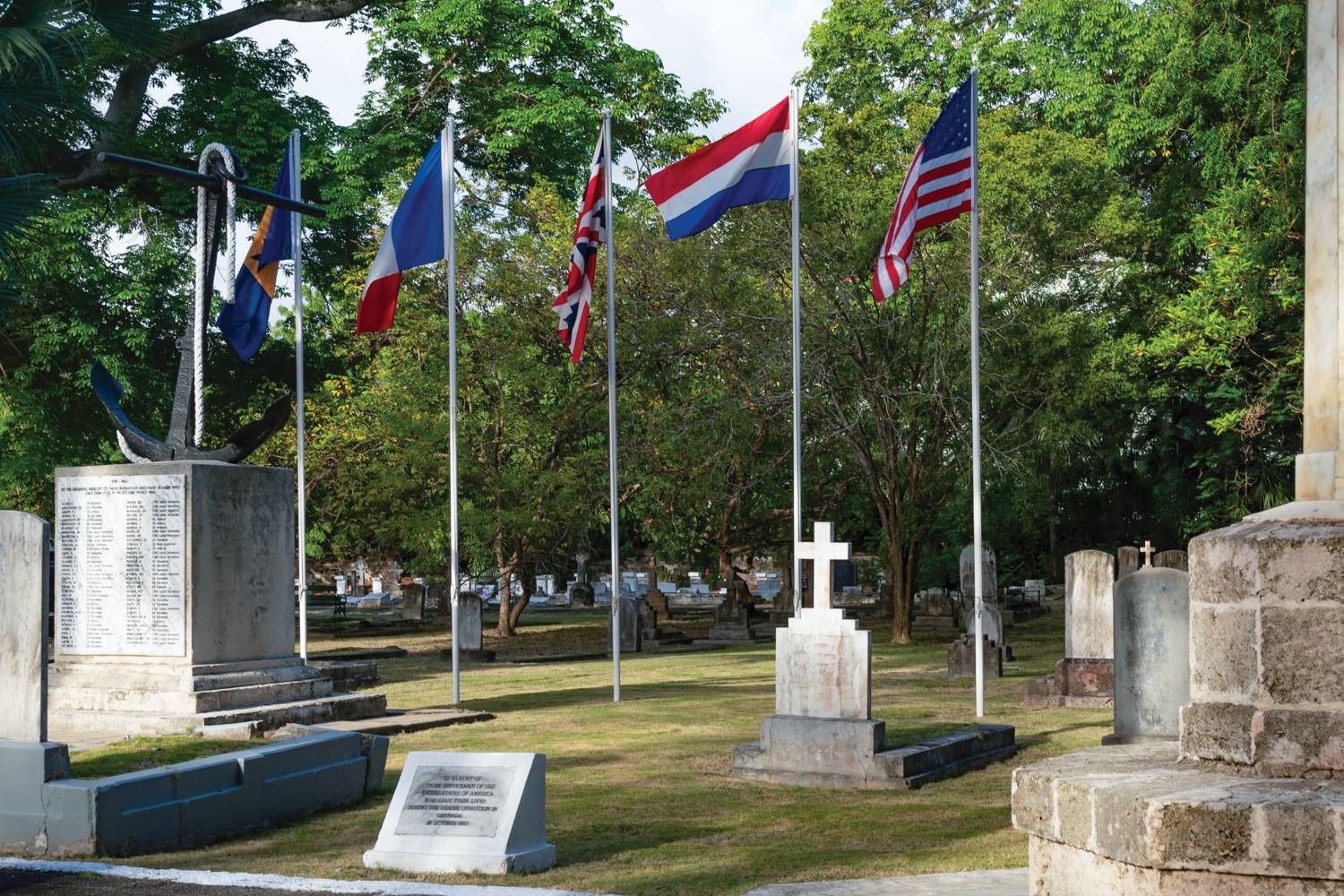
Photo: Warrant Officer Amber Stuparyk
Participating nations for Exercise TRADEWINDS (TW24) including Canadian, American and Barbadian delegates, along with H.E. MS. Lilian Chatterjee, Ambassador of Canada and Małgorzata Wasilewska, Ambassador of the European union, gathered at The Barbados Military Cemetery at Needham’s Point, for a small ceremony facilitated by the French Naval command team, in honor of Victory in Europe Day (VE Day), a day celebrating the formal acceptance by the Allies of World War II of Germany’s unconditional surrender of its armed forces, on May 8, 2024.
Professor Eli Berman is a Professor of Economics at the University of California, San Diego. He is Research Director for International Security Studies, University of California Institute on Global Conflict and Cooperation.
Dr. Ugurhan G. Berkok is an Associate Professor of Economics at the Royal Military College of Canada, and Adjunct Professor at Queen’s University, Kingston, Canada.
The North Atlantic Treaty was signed on April 4, 1949. The primary objective was collective defence, principally through deterrence of Soviet expansionism in Eastern Europe. That objective has now been rejuvenated, more than three decades after the collapse of the Soviet Union, to defend the alliance against Russia, the follower state to the Soviet Union. Today’s members, perhaps with the exceptions of Hungary and Turkey, remain fully committed to the founding principles of individual liberty, democracy, human rights, and the rule of law.
This article revisits the perennial NATO burden-sharingFootnote1 issue from the perspectives of the US and Canada. We use two economic concepts, club goods and outside options, to analyze choices made by those two countries in their contributions to NATO.
1. Mutual Security, Clubs, and Outside Options
In retrospect, the post–Cold War “peace dividend” period in Europe and the North Atlantic began to end between 2007 and 2014 with several incidents preceding the Russian invasion of Ukraine in 2022. NATO-Russia cooperation sustained a first bruise when Dimitri Medvedev became a placeholder for Vladimir Putin in 2008, clearly signalling the beginning of the end of whatever democratic path had existed in Russia after the implosion of the Soviet Union in 1991. Ominously, Russia invaded Georgia that same year. The NATO-Russia Council, initiated with the 1997 NATO-Russia Founding Act and established in 2002, continued a while longer, even including cooperative training, such as the 2011 Vigilant Skies counter-terrorism exercise. However, those came to an abrupt end in 2014 when “little green men”—Russian soldiers without insignia—occupied Crimea, and Russian-backed separatists founded the Donetsk and Luhansk People’s Republics.
With the full invasion of eastern Ukraine in 2022,Footnote2 the European strategic environment entered a new era. NATO declared Russia “a direct threat to Euro-Atlantic security,” and the NATO-Russia Council was declared defunct at the 2022 Madrid summit. NATO’s 2025 summit in The Hague declared that Russia poses a long-term threat to Euro-Atlantic security.
With a well-defined threat, the current NATO alliance clearly meets the definition of a collective entity providing a “club good” to members, which is to say a public good—in this case, mutual security—accessible only by members. As in the Cold War era, mutual security is achieved mainly through deterrence, which is a pure public good (i.e., not diminished by use) as long as threats are deterred. Importantly, deterrence through alliances is much more cost-effective than deterrence by individual states, and stunningly preferable to a costly war. Hence the attraction of NATO membership in the face of a direct threat, which Russia now generates.
Another useful economic concept is “outside options,” which help us understand entry, exit, and contributions. A potential member considering joining an alliance would compare its situation outside to that within, at some contribution level. Symmetrically, the alliance would consider how a member’s contribution compares with the additional costs of extending security to that member. Should both the potential entrant and the alliance benefit from entry, then it will occur, with the entrant’s contribution negotiated to split the surplus between the entrant and existing alliance members.Footnote3 The accession of Sweden and Finland following Russia’s invasion of Ukraine can be understood in those terms: Although neutrality may have felt safer for those two Nordic countries before 2022, the increased “direct threat” created a surplus for them if they joined, when compared with the option of remaining outside. Additionally, Sweden and Finland were capable, attractively situated partners for the rest of NATO in deterring Russia, when compared to an alliance without them. In particular, their accession adds NATO neighbours for the Baltic States, who were previously joined only to Poland through the narrow “Suwalki gap” at the Lithuanian border, sandwiched between Belarus and (Russian) Kaliningrad.
Of course, the outside options of the US and Canada are not nearly as affected by Russia’s invasion of Ukraine, a point we return to below, in discussing contributions.
How does an alliance affect non-members? Russia’s invasion of Ukraine may suggest to some that deterrence failed. Technically, that is incorrect: Ukraine was not a member of NATO, so Article 5 did not apply. However, the support provided to Ukraine (just short of boots on the ground) indicates that some commitment (beyond rhetoric) implicitly existed. That commitment would go beyond an explicit Article 5 promise, but makes strategic sense if it deters Russian attacks on members, or if it protects members by exhausting Russian capacity in fighting Ukraine. In that sense, it can be considered part of the club good activity which benefits members indirectly and non-members directly. Again, the benefits of military support to a non-member are greater for proximate members in Europe than they are for Canada and the US, whose security is much less affected by deterring or exhausting a Russian threat in Europe. NATO’s 2025 summit in The Hague introduced a novel expansion of the alliance by agreeing to count military aid to Ukraine, a potential member, towards members’ defence spending. The fact that such members as Hungary, Slovakia, and Turkey, which were potential dissenters, did not veto the resolution is rather encouraging in terms of alliance solidarity and integrity against what the Summit characterized as a long-term threat posed by Russia.
In this context, it is worth distinguishing between congestion of the benefits from a public good to members and the resources required to pay for it. A deterred Russia (vs. Ukraine) was nonrival in use, as all members benefited. Supporting Ukraine’s resistance against Russian invasion generates nonrival benefits to members. The exhaustion of Russian capacity to attack members of the alliance, for example the Baltic States, and hence the emerging deterrence outcome, may be well worth the cost of supporting Ukraine.
As of spring 2024, nearly all NATO countries faced a preparedness emergency in ammunition stocks, due to their donations to Ukraine and a deficient capacity to replenish their desired stocks. Recently, other deficiencies arose, such as air defence batteries. For example, even though keeping Russian forces far from the Polish border benefits Poland most, the alliance provides some mutual aid in preparedness by spreading the munitions burden across members.
In this context, one might consider a proposal for a shared inventory for immediate response. Under such an institutional arrangement, less “surge-able” capacity and a smaller inventory are required to maintain desired stocks. Given that NATO already operates the Strategic Airlift Capability and the Multinational Multi Role Tanker Transport Fleet, there is a reasonably successful precedent for this new arrangement with direct implications for burden-sharing.
With the two above-mentioned concepts—club goods and outside options—in place, we are almost ready to take on pressing questions: Ukrainian accession, US threats to exit the alliance, and Canadian contributions. However, first, there is a tension to address with a founding-principles approach to membership and contributions.
The smaller NATO during the Cold War had an easier time clustering around the four founding principles: individual liberty, democracy, human rights, and the rule of law. In fact, one of today’s exemplary democracies, Spain, was not permitted to join NATO until 1982, well after the fall of its dictatorship in 1975. (Ironically, Portugal and Turkey were among the founders in 1949. However, whereas the former was not a democracy at the time, the latter was a fresh one. Today their roles are reversed.) Post–Cold War NATO has become more heterogeneous with regard to those founding principles, despite the fact that the fundamental threat is still blowing from the autocratic east. Membership reached 32 early last year, and three other countries, including Ukraine, are partners.
Is NATO in 2025 best understood as a values-based alliance, perhaps with a secondary objective of promoting democratic principles, or strictly as a mutual defence club? The distinction matters when considering accession of democracies with weak institutions, such as Ukraine, or of eroding democracies, such as Hungary.
There is less tension between those approaches to understanding NATO than one might think. A key point about mutual defence alliances is their vulnerability to defection or even just low effort by members.Footnote4 Should Article 5 be triggered by an external attack, and should members not immediately spring to aggressively defend the targeted member, the results could be catastrophic. Less dramatic but still serious vulnerabilities would arise from an ally leaking classified intelligence to an enemy, or simply investing low effort in counterintelligence, training or munitions production. Given such sensitivity to defection or to low effort, an alliance must be discerning in its choice of members, choosing those who are least likely to defect—due perhaps to pressures from powerful neighbours, stakes or war-weary electorates. Yet, as the “democratic peace” literature has established, countries sharing a commitment to NATO’s founding principles are more able to commit to not defecting from the club in time of need. So one would expect that an alliance requiring a commitment to those fundamental principles would in fact be a stronger mutual defence club.
As a corollary, such an alliance creates incentives for aspiring members to develop institutions consistent with those founding principles, even if that were not the original intent of NATO.
Currently, member countries’ heterogeneous preferences regarding the four founding principles do in fact correlate with different attitudes towards the Russian threat. This correlation is evident not only among the new members such as Hungary and Slovakia but also among founding members such as Turkey and potentially even the US under the second Trump presidency. These observations suggest that, perhaps, the regress of democracy in a member country correlates with the possibility of breaking ranks with the alliance, currently at the intensive margin of compliance, but perhaps eventually at the extensive margin.
Returning now to Ukraine an additional argument for supporting its defence against Russia is that it is a relatively attractive potential NATO member. From the Ukrainian perspective, the calculation is clear: Article 5 protection would mitigate an existential threat. From NATO’s perspective, there are both benefits and costs. Ukraine is highly unlikely to defect, having experienced Russian hegemony and developed democratic institutions in order to reject it. In addition, it has demonstrated military capacity, innovation, experience, and commitment. The cost, though, is a festering dispute over its contested eastern border for which the domestic politics of committing to concessions may be infeasible. An alliance based on mutual defence commitments must be wary of moral hazard—in this case, the incentive to pick a fight over contested territory with a powerful foe.
Would admitting Ukraine as a member make sense?
Mobilizing nearly the whole Alliance in support of Ukraine was seen as following a path towards NATO’s founding principles. This enlargement of the alliance would directly boost the security of the members at the eastern margins of the alliance and of all members in general. The club’s benefit-cost principle for admissions, beyond adherence to the founding principles, suggests that the Alliance would be cautious in admitting countries that may not be ready to contribute to the security of members at a reasonable incremental cost arising from the security guarantee as codified in Article 5.
NATO as a security alliance coordinates the provision of security against external threats, just as a gated community offers security to its resident members. In this sense, we understand security as the absence of breaches thanks to credible deterrence that member countries’ contributions and the NATO organization produce. The admission of Ukraine stands as a project because it is still at war and it has yet to satisfy the founding principles. We also note that its admission of Finland and Sweden was held up by Hungary and Turkey, the two members with weak democratic records and for whom transactional gains were revealed to be more important than the increase in overall security due to new members’ significant geopolitical contribution to the alliance. By extension, whereas contiguity is a facilitator for expansion, remoteness may require a higher benefit-cost value provided by new adherents to the alliance. A case in point is AUKUS, the new Australian, British and American alliance in the making, where Japan and Korea, which are detached but high-security contributors to countering China’s threat to its neighbours as well as its expansionism in the South China Sea, may well be the next members. Georgia is another struggling democracy threatened by Russia.Footnote5 In comparison, it comes with mostly costs: contested borders, weak institutions, non-contiguous supply lines, and the potential to strengthen the current Russian government by pursuing an aggressive response.
2. A Club Within a Club: Canada and the US
Considering clubs and outside options, the US and Canada are each special cases, within a special relationship. Canada and the US started discussing potential aerial threats originating from the Soviet Union in the immediate aftermath of World War II. The Bear (Tupolev95), a Soviet strategic bomber and missile launch platform, entered service in 1952. The Soviets then developed the first intercontinental ballistic missile, R7 Semyorka, in 1957. In response, Canada and the US built the Distant Early Warning (DEW) system of radar stations close to the Arctic and formed the North American Air Defense Command (NORAD), which became North American Aerospace Defense Command (still NORAD) in 1981, against the Soviet threat. The DEW line was modernized and became the North Warning System (NWS) around 1990 and will be modernized again shortly—particularly to provide distant and beyond-the-horizon detection of hypersonic glide vehicles and cruise missiles. That alliance is extremely cost-effective: once the NWS was deployed in northern Canada and Alaska, the marginal cost of protecting Montreal once New York was secure was minimal, and vice versa. Outside options are dominated.
What is the implication for NATO of this special relationship? Although Canada and the US are fully committed to the NATO club good,Footnote6—i.e., collectively produced mutual security for members as coded in Article 5—the two countries together have an excellent outside option through NORAD and the NWS. In addition, the two countries of course have oceans separating them from major conventional threats. So one might think that Canada and the US face less domestic political pressure to make NATO contributions than do other members. However, NORAD/NWS arguably also has positive spillovers for the European members of NATO. An effective NORAD/NWS lessens missile attack risk from the Arctic and hence releases American military power to assist European members in a crisis.
Even within this special relationship, the US is a special case. As the largest economy, it has the strongest incentives to secure global peace and prosperity through trade, which benefit its exporters and major corporations. Its outside option, going it alone (even with Canadian partnership in NORAD/NWS) would leave it without NATO partners in freedom of navigation actions in the South China Sea, or in some future counterterrorism effort in the Middle East or Asia, or in intelligence sharing (with NATO members) in opposition to Russia, Iran or China. That would seem to be a poor choice.
Even if there is an enthusiastic domestic constituency that would like to see the US quit NATO, making America isolated again makes even less sense in an era of intercontinental missiles and grey zone threats (which we return to below) than it did in the early 20th century. In the 21st century, US citizens, investments, and government representatives are present and visible in all but the worst-governed corners of the planet, projecting US influence and especially promoting US exports. It is difficult to see how the US economy could operate at its current efficiency without keeping those assets safe, which is achieved most efficiently in partnership with allies. More importantly, the US is already committed to nuclear rivalry with Russia, and increasingly with China, in addition to an AI arms race with China. Those commitments to security research and to military capacity already require a budget of about 3.5% of GDP, now at par with the new NATO target of 3.5%.
Canada is a special case for largely the opposite reason. While it shares with the US a favourable geography and an effective missile defence system, it has a much less important role to play in global exports, and none at all in nuclear rivalry. So, Canada actually has far less to gain from Article 5 guarantees than most countries, and far less reason to project power and influence abroad. Hence, it is hard to explain to Canadian voters why national defence should meet the new 3.5% of GDP target,Footnote7 which it falls far short of, or why foreign aid should meet European Union averages, which it does not.
Canada, the US, and Ukraine
Considering this geography, the benefits of resisting Russia in Ukraine accrue much more to European members than they do to Canada and the US. Even though Canada is home to the world’s third-largest Ukrainian population (after Ukraine and Russia), the invasion alone cannot be expected to noticeably increase Canada’s military/GDP commitment, as it has little effect on its security.
For the US, the stakes in Ukraine are much higher, not because of its own domestic security but because of the message its actions send in relation to US rivalries with China, Russia, and lesser powers such as Iran. NATO’s efforts in defence of Ukraine have so far demonstrated technological superiority, logistical prowess, successful training of foreign forces, and a remarkable ability to coordinate allies to pursue a common purpose. Though economic sanctions on Russia have been a disappointment so far, and the Ukrainians have lately suffered reversals due to lack of supplies and personnel, the reputational effect has been a net positive and a credit to US leadership. Whether the US and NATO will demonstrate stamina in the longer term remains an open question which allies will surely speculate on feverishly in the coming months, nowhere more than in Kiev and Taipei.
Grey zone threats
Other salient threats to the US and Canada exist in the grey zone. When the North Atlantic Treaty was negotiated, kinetic weapons of conventional warfare were dominant, but since then new threats have arisen. Article 5 covers conventional threats such as invasions, bombardments, sabotage, and attacks on a country’s citizens, but not election interference, disinformation campaigns, cyber attacks, ransomware attacks, theft of private data and other online threats, or state-sponsored terrorism. In a sense, US and NATO superiority in conventional warfare forced a switch to methods now favoured by authoritarian great powers (China and Russia) and by lesser powers as well (e.g., Iran and North Korea). Article 5 does not cover these.
Two salient facts about these nonconventional threats are particularly relevant to the US and Canada: First, deterrence against them has been incomplete, even when state actors are clearly implicated. Second, the geographical barriers that protect North America—vast expanses of ocean and tundra—offer no security in cyberspace. Particularly troubling on this continent is the 2016 Russiagate and Pizzagate election interference in the US, and Chinese interference in Canada’s 2019 and 2021 elections. Of course there are plenty of European targets as well, including Russian financing of France’s National Front (now known as National Rally), but on this continent we are more accustomed to being secure. Online, Ottawa and Washington may as well be Kiev.
So one might think that the US and Canada would be particularly interested in expanding Article 5 protection to grey zone attacks. NATO militaries are building and using these capabilities, including more than cyber-defence and cyber-attack tools, but no mutual defence obligation exists in treaty to use them.
Geoeconomic threats
Of course, Canada and the US are not the only special cases. Even among democracies, member countries’ economic and security interests do not always align, thus forcing tradeoffs. Misalignment yields compromises in members’ defence policies, reducing contributions and resulting in weakened provision of security within the alliance. Two recent examples illustrate unequal incidence of supporting NATO policy among members. Prior to the Russian invasion of Ukraine, the heavy German dependence on Russian energy restricted Germany’s sphere of action in defence. Dissonance on potential Russian aggression produced two alarming consequences, which boomeranged to haunt not only Germany itself but also the alliance. First, Germany scrambled to satisfy its population’s heating needs and its industry’s energy needs. Second, the depleted resources available to the German forces compromised Germany’s military aid to Ukraine as required by NATO policy. More recently, a Russian blockade of Ukrainian grain exports from the Black Sea forced a reorientation of Ukrainian exports to land transport. Poland, which had already borne enormous costs in refugee absorption and integration, then found its farmers’ grain prices undermined by Ukrainian exports. Fortuitously, this rift did not escalate to divide the member countries involved, in part due to the governments in power in the two countries.
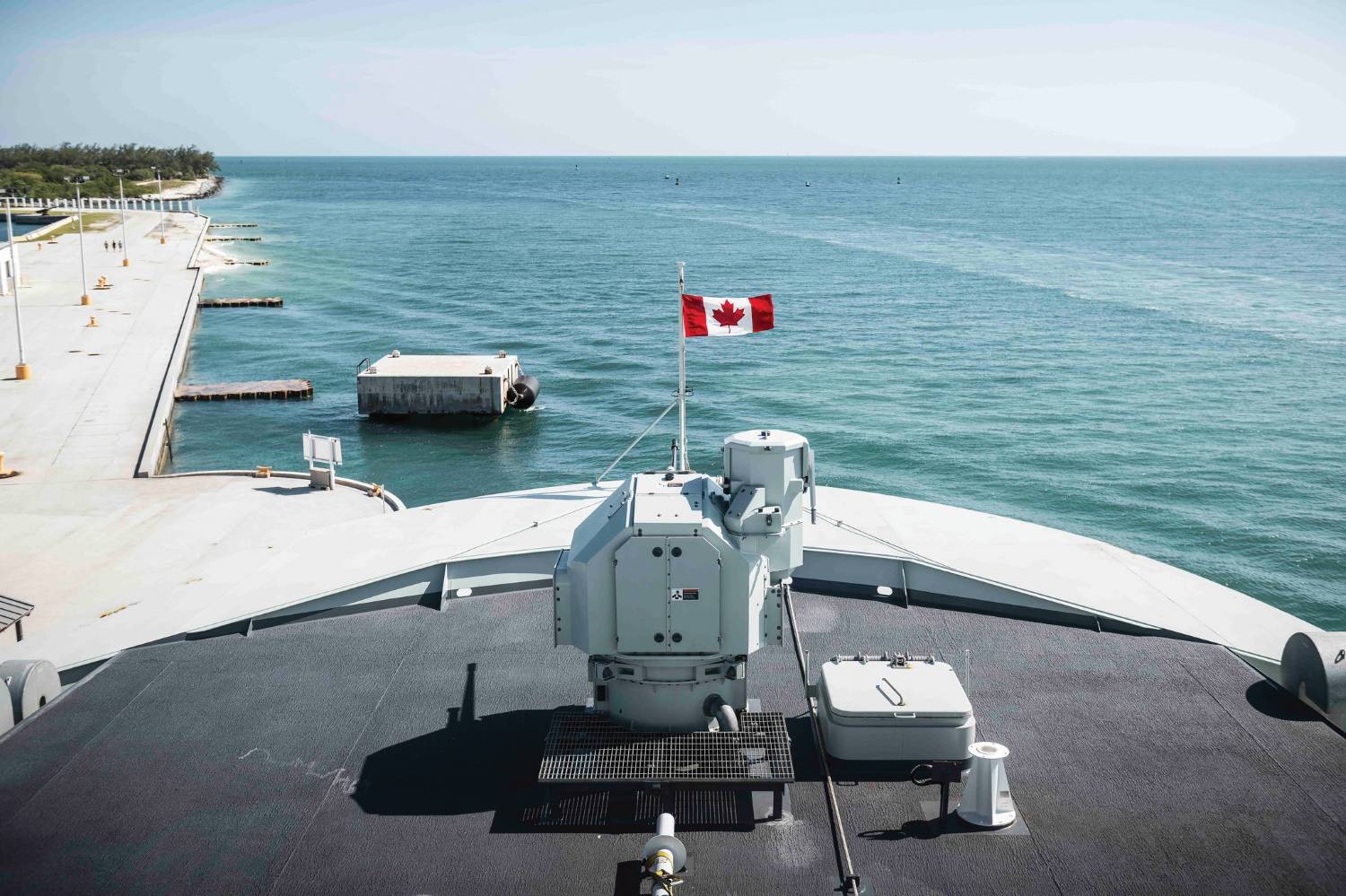
Photo: 8 Wing Imaging, Canadian Armed Forces
CH-146 Griffon after a landing on top of a mountain as part of a flight training, North of Whitehorse Cadet Training Center as part of OP NANOOK-TAKUNIQ 2025, Yukon Territory, on 11 March 2025.
Another dimension of the NATO member countries’ differential commitment to North Atlantic security stems from their commitments elsewhere. Of the various out-of-area commitments of member countries, British and French legacy commitments to Africa and Asia are prominent. Yet the largest is the US commitment to Pacific security, upgraded by President Obama’s “pivot to Asia-Pacific” in 2011.Footnote8 The pivot envisaged not only force commitment but also energy devoted to establishing bilateral relationships with East Asian democracies and also with other countries to prevent Chinese hegemony in the region. It preceded China’s sharp escalation of interventions and its hardening posture in the South China Sea, which now affects international shipping lanes and could eventually affect shipping in the Arctic too by generating support for Russia in its North East Passage. American leadership of NATO is inevitably weakened because of its divided attention and reduced commitment of force to the North Atlantic region. Moreover, member countries capable of projecting power abroad have followed the American lead, participating in this Asia pivot by reallocating their naval and other forces to Asia. The Royal (UK), Canadian and French navies have been navigating with Americans in the South China Sea to assert the freedom of navigation. While these actions strengthen European economies by supporting international trade, they are a drain on the capacity available for European security.Footnote9
Threats against NATO and its members
During the Cold War, NATO members and other democracies faced the ideological and military might of the Soviet Union. The current geopolitics presents the ideological and military might of China and the military might of Russia devoid of ideology. Both countries pose geopolitical threats, especially towards their neighbours, and both intensively use grey zone warfare to undermine NATO’s influence and exploit democracy’s openness for their political purposes.Footnote10
Alliances may become more than the sum of their parts, especially if the solidarity codified in Article 5 is credible and the intra-alliance relations progress towards efficiency improvements, not only in political and military realms but also in technological improvements through joint industrial projects. For instance, whereas military and other aid to Ukraine has remained solid since the invasion, the recent hold-up attempts by the small group of populists in the US Congress undermined that credibility and stoked fears of abandonment for Ukraine. Although Ukraine is not a member, Baltic members may have revised their own abandonment probabilities upwards in response to that incident. The abandonment probability may have already been revised upwards again with the second Trump presidency.
Trying to sever the weakest links in an alliance may be effective, especially when their democracies have been weakened by populism such as in Hungary and Turkey. Russian use of economic warfare, through cheaper natural gas for both countries and the sale of the S400 air defence system for Turkey, undermined both countries as reliable members of the alliance.
Whereas 2016 US election interference by Russia was investigated and the FBI has twelve Russian intelligence officials on its publicly available wanted list, there is no guarantee that the same malevolent actors or their proxies are not preparing to interfere in future elections. One of the grey zone attacks on a US election, the so-called Pizzagate scandal targeting Hillary Clinton, was triggered by false news circulated on social media. If that attack and the unidentified or unattributed ones affected the outcome of the 2016 presidential election, they certainly damaged US leadership in NATO due to Trump’s various actions that undermined trust in the US’s leadership of the alliance.
Most NATO member countries do not possess critical natural resources. One way Russia exploits this vulnerability is through the late Yevgeny Prigozhin’s Wagner mercenary group that infiltrates countries in the Sahel, particularly Niger, a country endowed with uranium deposits. Russia’s challenge on such a critical resources empowers it against NATO. The actions of Wagner, a non-state actor, certainly remain below the open conflict threshold. Another similar attempt is currently playing out in New Caledonia, a French overseas territory endowed with one of the world’s largest known nickel reserves. Apart from Russia’s warfare in the grey zone, similar Chinese activity encourages the New Caledonian secession movement.
3. Understanding the burden sharing
If—and this is an assumption that should not be taken lightly—every NATO country enjoys the public good known as Article 5, the US is always the pivotal player in the assurance of Article 5. Whereas this role is crucial to most NATO countries, and especially to those at the periphery due to a bellicose Russia, the exposure of the US to Russia necessitates Canadian involvement when there is a major missile threat from over the Arctic or possible military surveillance and even attacks from a navigable Arctic and the Northwest Passage.
The past “2% of GDP” debate and the new 3.5% agreement
At the 2014 Wales Summit, NATO countries agreed to spend 2% of their respective GDPs on defence.Footnote11 It was expected that more than 20 member countries would reach or exceed that target by 2024. By the end of 2024, 19 of the 32 members had reached the target. However, the 2025 NATO summit in The Hague raised the target to 3.5%. This increase, when achieved, should boost member capabilities, preparedness, deployability, and interoperability to a level necessary for deterring Russia but insufficient in terms of member country particularities. One might add the participation in collective security missions as an indication that would complete the previous four components of force generation towards collective security. For example, a country like Estonia under severe threat must understandably invest in its own border protection and defend in the grey zone rather than thinking about taking a full part in a mission like the International Security Assistance Force (ISAF) in Afghanistan (2001–2014). By contrast, a country like Canada with an advantageous geopolitical environment enjoys more leeway in allocating its resources to deployed NATO missions. Canada currently leads a fully equipped brigade in Latvia as part of NATO’s Enhanced Forward Presence and a full battle group to the Baltic Republics as a deterrent against Russia’s threatening posture in the region. Therefore, the threat distribution is a major factor determining the composition as well as the level of defence expenditures.
Reconsidering the 3.5% for a more efficient burden-sharing rule
There are advantages to such a simple rule as a member country allocating 3.5% of its GDP to well-defined defence expenditure. First, it is a clear and transparent criterion for a member country in good standing.Footnote12 Second, member countries collectively agreed to 2% at the 2014 Wales Summit and to 3.5% at the 2025 summit in The Hague, to a focal threshold clear to all members. This phenomenon itself has strengthened the alliance by motivating member countries to work towards a collective goal. Third, coalescing around a goal may motivate member countries to collaborate in building the capabilities achievable through joint projects.Footnote13
However, whether 3.5% of GDP corresponds to an efficient threshold in terms of burden-sharing remains an open question.Footnote14 Based on the economic analysis of club goods, it is tempting to suggest that a country’s marginal contribution ought to be equal to its marginal benefit from the alliance.Footnote15 This would mean a positive net benefit to the member, old or new. The remaining challenge is to operationalize this general idea. In the absence of direct defence output measurements, burden-sharing remains elusive but not impossible.Footnote16
The 3.5% rule does not take into account members’ incremental net contributions to narrowly defined deterrence by the alliance, namely military capabilities. A country’s incremental net contribution (INC) exhibits three important components. The first is the security threat a particular member country is facing: some countries may be generating a negative INC, i.e., the alliance’s contribution to that country’s security exceeds the country’s contribution to the alliance. The Baltic countries immediately come to mind but, under different circumstances, they might not be under so great a threat as they are currently facing. Second, some members possess assets on a global scale and are thereby exposed to threats. Such a global spread may explain their superior capabilities, but the existence of their forces also generates positive externalities for fellow members. Britain and France, with their colonialist pasts, have such global exposures, but they may also have greater capabilities. The US is in this category, albeit without a colonialist past. Lastly, three member countries in the preceding category possess nuclear capabilities, which is a major component of NATO’s nuclear deterrence in particular but also its deterrence in general.Footnote17 Their INC far exceeds those of fellow members.
Based on this three country groups classification, we can think of a potential scenario as a pure example where one, two, or three countries intervene to respond to threats. One can think of Operation Unified Protector in 2011 in Libya where the British-French coalition intervened, with significant support from the US. Under different conditions, different coalitions may intervene on behalf of NATO. We note that, if the US had happened to lead Unified Protector, with support from Britain and France, such a coalition would have had a different impact than the actual one. If one considers all permutations of members and computes the contributions of a country to different coalitions obtained from the whole group of member countries, then one can find a given country’s relative contribution to the alliance.
These relative contributions may yield a spectrum of results, from one country’s uncontested pivotal role to weaker countries’ minor effects on the overall performance of the alliance. The resulting country effectiveness relative weights can then be used to modify the simple 3.5% of GDP policy towards higher shares for countries with weaker contributions. To summarize, this new burden-sharing proposal aims at improving the new 3.5% policy of burden sharing by incorporating a rigorous mechanism that internalizes the positive externalities generated by countries with positive incremental net contributions to alliance deterrence.
4. Expanding the club contract?
NATO, at its founding in 1949, was the product of the Second World War and the security threat emanating from Stalin’s deeply ideological Soviet Union. Hence, the alliance contract aimed at countering the threats of the period, mostly warfare between regular armies. The nuclear age came and stayed, but the 21st century brought a fundamental necessity to review and expand the contract in the light of grey zone threats enabled by digital technologies. NATO Club Contract, pointedly Article 5, focuses on conventional threats, such as “attack on our citizens” or “violation of our borders,” whereas some grey zone threats are new and not covered by the contract.
Vertical expansion of the contract
The vertical expansion would cover hitherto existing threats to countries’ national security and seek more effective counter-measures. However, with the advent of new technologies such threats may now be more ominous, thus requiring collective effort. Disinformation, assassinations, election interference, terrorism, and disruption of trade and of the freedom of navigation all existed prior to the new technologies but now appear reinforced. For example, the recent disruptive missile attacks by the Iran-proxy Houthis required collective anti-missile action by the US, French and Royal navies. It brought back memories of the 2009 anti-piracy action through the Combined Task Force deployment off the coast of Somalia and in the Gulf of Aden, although the piracy was a spontaneous and entrepreneurial threat to world trade rather than a plan carried out by any major or regional power’s proxies.
Addressing the issues surrounding election interference and supporting the rise of populism is part of the grey zone warfare. The 2016 Russiagate and Pizzagate election interference in the US, Chinese interference in Canada’s 2019 and 2021 elections, and the 2014 Russian financing of France’s National Front (National Rally since 2018) are all hybrid warfare against NATO democracies by autocracies.Footnote18
Horizontal expansion of the contract
The horizontal expansion of the club contract beyond Article 5 has been happening mostly at the input level. However, the grey zone warfare has risen to threatening levels and the alliance has to update the club contract to strengthen the deterrence signals in the grey zone.Footnote19
At the strategic level, the alliance must go all out to counter Russia’s dangerous hybrid warfare, including direct and indirect proxies like Wagner and Syria. As for China, which has a significant risk of economic loss, a new perspective of projecting deterrence has recently been suggested. The standard “if you attack, then …” signal may be complemented by the “if you don’t attack, then …” promise, with business-as-sort-of-usual economic relations. This may be implicit in the new Taiwanese president Lai’s message to China quoted at the end of this article. As discussed above, AUKUS is a response to China’s aggression in its vicinity, challenging its neighbours’ sovereignties and endangering the freedom of navigation in international waters. Since there is already a precedent for out-of-area expansion, namely the ISAF in Afghanistan, the NATO pivot to Asia-Pacific can be envisioned as the generation of a new hub with NATO and AUKUS, with overlapping memberships.Footnote20
As for horizontal expansion in terms of inputs into the collective security, NATO Strategic Airlift Capability, Baltic Air Policing (Quick Reaction Alert mission), and the Multi Role Air Tanker Transport Capability are three of the recent collective security projects under the NATO umbrella. In addition, there is the Joint Strike Fighter program, with Australia, the UK, and the US as partners overlapping with AUKUS. Further potential collective measures, currently being built, are common ammunition stocks and European defence industrial policy to avoid costly duplications in equipment production.
NATO’s expansion, whether of its membership or of its club contract horizontally and vertically, will necessarily entail a continuing discussion of burden-sharing, as it will trigger a reconsideration of members’ contributions as reflected in their burdens towards shared threat perceptions as well as their national threat perceptions. In this regard, French President Emmanuel Macron’s prophetic question on the future of Article 5 still persists in the light of potential isolationist tendencies.
We end with a reminder of NATO’s founding principles through the threats faced by such countries as Estonia, Latvia, Lithuania, Georgia, and Ukraine. They would wholeheartedly sign the following quotation from the inaugural speech of Taiwan’s new president: “I also want to call on China to cease their political and military intimidation against Taiwan, share with Taiwan the global responsibility of maintaining peace and stability in the Taiwan Strait as well as the greater region, and ensure the world is free from the fear of war.” (President Lai of Taiwan, May 20, 2024.)