

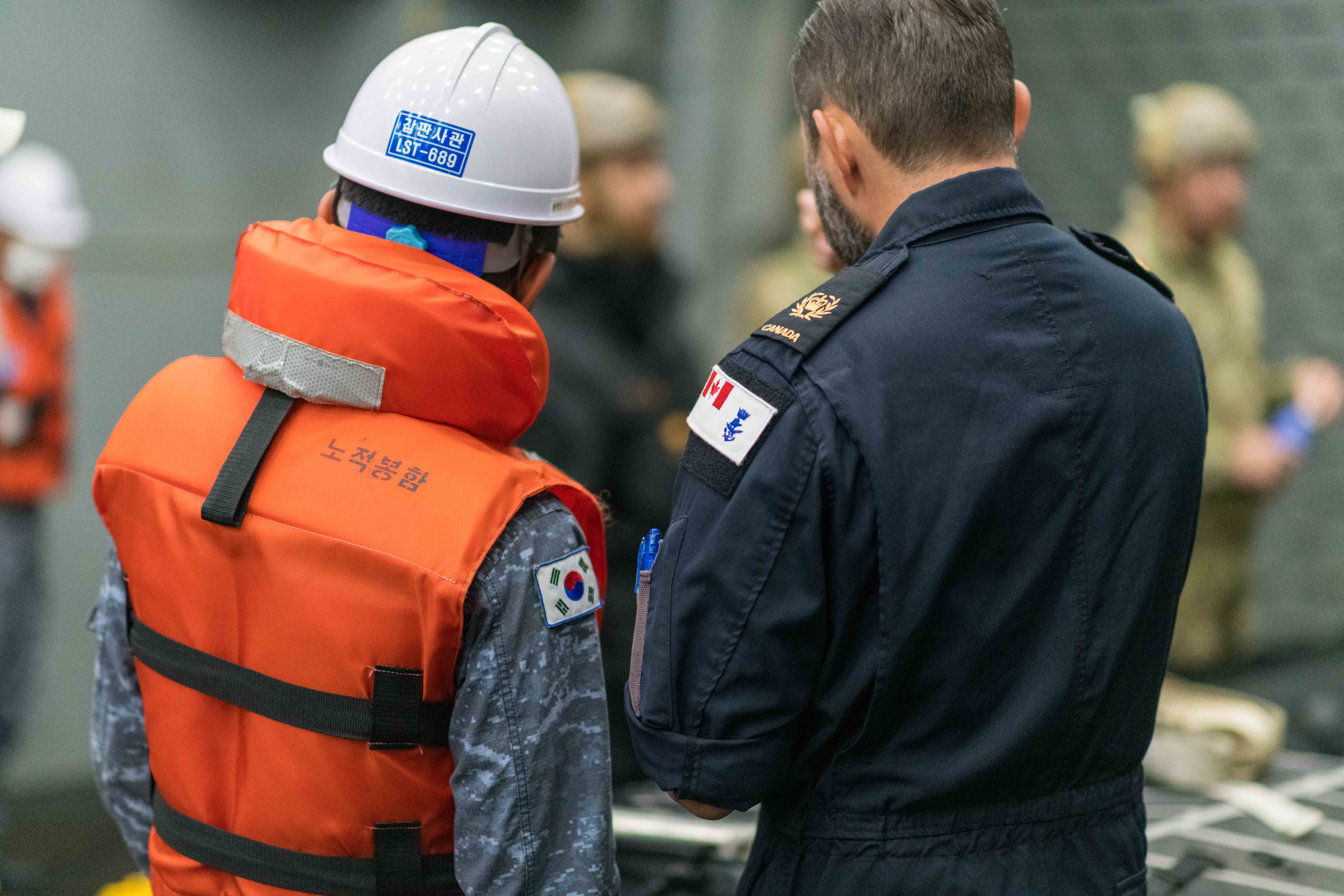
Photo: Master Corporal Matthieu Racette, Canadian Forces Combat Camera
Chief Petty Officer Second (CPO2) Class speaks with a member of the Republic of Korea Navy during the Multinational Mine Warfare Exercise 22 (MNMIWEX 22) in the vicinity of Pohang, Republic of Korea on October 9, 2022.
Samantha Olson is a first-year graduate student at Georgetown University pursuing an MA in Security Studies with a concentration in terrorism and substate violence. In 2023, she graduated with an Honours BA in History from the University of Victoria. Her research interests include United States Department of Defense directives, civil-military relations, anti-government terrorism, and radicalization/deradicalization.
The author would like to express her gratitude to Sylvain Jaquemot, Arnold Yates, and Mitch Wierenga for their indispensable contributions to this project and their willingness to share their experiences. She is also grateful for the support and guidance of Dr. David Zimmerman at the University of Victoria.
Much has been written about senior officers in the history of the Royal Canadian Navy (RCN). Flag officers and captains have been the subjects of biographies and case studies, even receiving specific treatment in general histories of the RCN.Footnote 1 However, as any sailor will tell you, the smooth functioning of day-to-day naval operations depends on the leadership of petty officers. Despite their crucial role, Chief Petty Officers (CPOs), the highest non-commissioned rank in the RCN, have been mostly ignored in studies of the RCN and Canadian naval operations. The literature that focuses exclusively on CPOs is written for the internal use of the RCN; it emphasizes leadership efficacy and training protocols with the intention of future organizational improvement. While helpful in providing a general picture of the role and duties of CPOs, these sources do little to inform those not already familiar with naval operations and the chain of command. Furthermore, CPOs are evaluated only within the context of organizational hierarchy; their individual experience and expertise are lost in these narratives.
Based largely on the oral histories of three Chief Petty Officers (narrators), this article aims to expand the understanding of the role of CPOs by highlighting the lived experiences narrated by the CPOs themselves. Indeed, as these interviews suggest, the roles and responsibilities set out on paper do not always correspond to the reality of the rank. Thus, this article is by no means a refutation of the existing literature’s definition of the role of CPOs. Instead, this article is intended to supplement the existing literature, drawing attention to where the oral histories of this project’s narrators confirm, contradict, and contribute to the generally accepted understanding of the role of CPOs in the organizational hierarchy of the RCN. Whereas the existing literature takes an organization-level approach to understanding the function of CPOs, this article emphasizes the individual. By allowing the insights revealed by the oral histories of these CPOs to delineate the definitional boundaries of the role of CPOs in the RCN, a more complete picture of the rank begins to emerge. Indeed, as these interviews suggest, the roles and responsibilities set out on paper do not always correspond to the reality of the rank.
The available literature establishes a foundational definition of “CPO,” highlighting their general responsibilities. In their article dedicated to exploring the role of CPOs, CWO Sherman Neil and CWO Richard Gillis provide a cogent summary of the role: CPOs are trusted advisors within leadership teams, co-stewards of the Profession of Arms (POA), and custodians of the Non- Commissioned Member (NCM) Corps.Footnote 2 CPOs, specifically Chief Petty Officers First Class (CPO1), are the highest-ranking NCMs in the RCN, having been promoted through the ranks based on their merit, technical skills, and leadership capabilities.Footnote 3 Due to their unique position and the breadth of their careers, CPOs can provide expert input to their superiors supported by decades of practical experience.Footnote 4 As such, they often develop unique advisory relationships with their commanding officers; they bridge the gap between senior officers and the NCM Corps.Footnote 5
In recent years, the role of CPO has expanded to meet new security challenges, which is the focus of the most recent available literature. Understandably, much of this work emphasizes how the role of CPO has evolved at the organizational level. In addition to their tripartite definition of CPO, Neil and Gillis emphasize the need for CPOs to transform and adjust to operational complexity, balance institutional imperatives, foster organizational efficiency, and adapt to new security challenges.Footnote 6 CWO Necole Belanger examines the need for updated senior NCM training in her article, “The Accidental Strategic Chief Petty Officer/Chief Warrant Officer.” She asserts that strategic CPOs, who operate beyond the tactical level and can adapt to meet future security challenges, are produced by accident rather than design.Footnote 7 Thus, Belanger’s research focuses on examining leadership models that might produce CPOs who are prepared to engage in some of the strategizing previously reserved for officers. Belanger’s approach requires an organization-level framework within which to situate existing and future CPO responsibilities as they pertain to the entire CAF. Again, in her 2021 article, “Deciphering the Roles of Chief Petty Officers/Chief Warrant Officers within Command Teams,” Belanger suggests that further personal and professional development of CPOs through new career programs will help them play a more prominent role in advising their commanding officers on strategic and operational matters.Footnote 8 Similarly, CPO1 Alena Mondelli writes that the days of senior NCMs operating in “a predominantly technical role” are over.Footnote 9 Non-traditional warfare involving asymmetric operations has put senior NCMs in a position where they must be prepared to act autonomously as leaders.Footnote 10 Thus, the existing literature aims to flesh out the understanding of the CPO’s role—and the boundaries of that role—of CPOs as it pertains to the overarching organization of the CAF. As such, this approach does not tend to evaluate CPOs in their own right. Given the transformation of the Indeed, as these interviews suggest, the roles and responsibilities set out on paper do not always correspond to the reality of the rank.” 64 CPO’s role in recent years from a largely tactical-operational role toward a strategic one, investigating how strategic CPOs ought to fit within the RCN’s organizational hierarchy is warranted. However, this research is incomplete without the experiences of individual CPOs.
The author conducted interviews with three retired CPOs as a means of augmenting the aforementioned organization-level approach with individual recollections. Spanning from 1962 to 2021, the collective service dates of raise some initial questions about the applicability of these interviews to current discussions of the transformation of the role of CPOs in the RCN. This article does not assert that the definition elaborated by the CPOs interviewed is entirely applicable to the present context. Rather, this article suggests that by engaging with individual CPOs, the definition of the role can be honed to reflect what is actually occurring on the ground with a greater degree of certainty. Thus, the purpose of these conversations was to elicit specific details on how the narrators remembered their careers in the RCN and then use these details to negotiate the lived experiences of CPOs with the expectations of the CPO’s role. As each narrator had a vastly different career path and operational specialty, the focus of these interviews was the responsibilities associated with the rank of CPO.
Chief Petty Officer First Class (CPO1) Ret’d Sylvain Jaquemot enlisted as a Naval Electronic Sensor Operator (NESOP) and served from 1987 to 2021. Jaquemot was appointed as Coxswain of HMCS Winnipeg and, as the senior-ranking Non-Commissioned Member, was part of its Command Team. In 2018, Jaquemot was appointed as Fleet Chief for the Pacific Fleet, serving as an advisor to Commander MARPAC. Chief Petty Officer Second Class (CPO2) Ret’d Arnold Yates joined the Sea Cadets at 12, the Naval Reserve at 16, and finally the RCN at 17, enlisting in the boatswain trade and serving from 1962 to 1989. Yates was posted to Royal Roads Military College as a drill instructor and was later posted to the Naden Fleet School to teach sailing. Retiring from the CAF in 1989, Yates then went on to work for Victoria Harbour Ferries for twenty-three years. CPO2 Ret’d Mitch Wierenga enlisted as a Radar Plotter and served from 1964 to 1997. As a Petty Officer First Class (PO1), Wierenga spent three years at the Canadian Forces Recruiting Centre in Calgary, Alberta, as a Military Career Counsellor. As a CPO2 at sea, Wierenga was a Combat Department and Training Chief; on shore duty, he was the Base Financial Counsellor at CFB Esquimalt. Wierenga retired in 1997 and currently resides in Victoria, BC.
At this juncture, it is worth elaborating on the distinction between CPO1 and CPO2 and its implications for defining the role of CPO. As outlined by DAOD 5031-8, the main difference between CPO1s and CPO2s is that CPO1s can operate at the strategic, operational, and tactical levels, while CPO2s operate mainly at the operational and tactical levels.Footnote 11 For example, CPO1s can be integrated into the Command Team Triad, composed of the Commander, Executive Officer, and Coxswain, to serve in a more strategic role. As the only CPO1 interviewed, Jaquemot was the only narrator able to provide insights on his formal role in the Command Team Triad. By contrast, CPO2s are specifically tasked with “unit and sub-unit level missions and activities” rather than serving as “organizational leaders.”Footnote 12 The existing literature tends to emphasize CPO1s as the default unit of analysis for examining the role of CPOs in the RCN more generally. However, as will be discussed later in this article, these roles are not always so clear-cut. CPO1s maintain their role as mentors to junior non-commissioned personnel when they are integrated into the Command Team Triad, just as CPO2s often take on some of the advisory responsibilities of CPO1s. Each narrator was asked the same series of questions about the role of CPOs without reference to their rank as either CPO1 or CPO2 (see Appendix A).
When comparing the existing literature with the oral histories of this project’s narrators, three main trends emerge:
- The organization-level definition of CPO is sometimes confirmed by the narrators. The significance of promotion, the advisory role of CPOs for their commanding officers, and the importance of the CPO as a bridge between the NCM and officers are all reaffirmed by their experiences.
- The oral histories sometimes contradict the available literature. Notably, they all define the role of CPO by emphasizing its managerial responsibilities, whereas the existing literature normally defines it largely by its advisory function. The training of new sailors and the role of the CPO in passing along naval customs and traditions are viewed quite differently by each; the existing literature portrays these functions as being innate.
- The narratives contribute new information to the existing literature. The fine details of the day-to-day responsibilities of CPOs, the vast differences between sea and shore duty, the unique position of CPOs as an intermediary between civilians and military personnel, and their personal recollections deeply enrich the literature about CPOs. The author conducted
Confirmations of the Existing Literature on CPOs
A fundamental aspect of the attainment of the rank of CPO is that it is achieved exclusively through meritorious promotion. As Belanger notes, meritorious promotion guarantees a wealth of expertise and leadership skills Footnote 13 Neil and Gillis remark that CPOs are developed over the course of their careers.Footnote 14 The CPOs have spent decades and occupied many positions, and all three are proud of having had a career in the navy. Yates addressed this point specifically, noting that he was proud to have done well and to have advanced fairly quickly through the ranks. Footnote 15 When asked about pivotal moments in his career, Jaquemot highlighted his advancement from Petty Officer Second Class (PO2) to Petty Officer First Class (PO1) as a moment that stood out. In his case, the advancement meant going from an Electronic Warfare Supervisor to the Section Head in charge of all above-water warfare devices. “I remember not being successful on my course at that point at the tactics phase,” he said, “basically, I failed.”Footnote 16 Armed with feedback, Jaquemot honed his skills as a PO1 and went on to become a CPO1. When describing his path from Ordinary Seaman to CPO2, Wierenga drew particular attention to the courses taken and requirements met before each rank advancement, giving a sense of how long the cultivation of a CPO takes.Footnote 17 In this narrative, it becomes clear that a CPO is characterized not only by the responsibilities and skills of their present rank but by the mastery of all preceding ranks as well. This wealth of experience makes CPOs indispensable to their commanding officers.
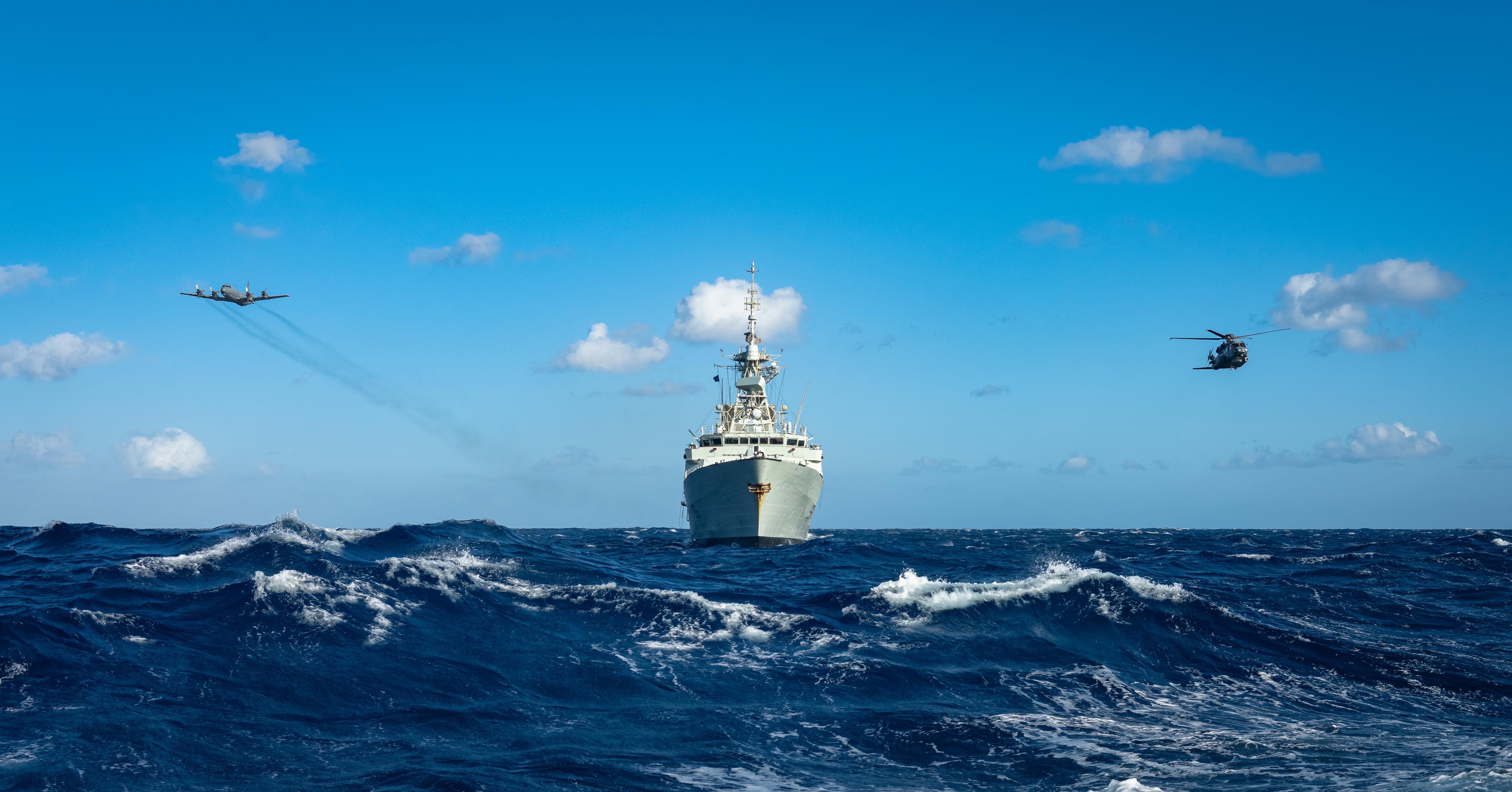
Photo: Corporal Braden Trudeau, Canadian Armed Forces photo
HMCS MONTREAL, its embarked CH-148 Cyclone helicopter, call sign Strider, and a CP-140 Aurora aircraft, call sign Demon 02, patrol the Mediterranean Sea to help build maritime situational awareness in associated support of NATO’s Operation SEA GUARDIAN on April 11, 2022.
The breadth of organizational knowledge of CPOs situates them well to train junior officers and advise their commanding officers. Indeed, the existing literature pays overwhelming attention to the latter role. For Neil and Gillis, the primary responsibility of a CPO is to be a trusted member of the leadership team.Footnote 18 Belanger’s call to update training is justified by how that would better equip CPOs to advise their superiors at the strategic and not just the tactical levels.Footnote 19 Jaquemot described the advisory role of the CPO as a sort of “sanity check” for those commanding officers who were directly involved with strategic planning but perhaps distant from the realities of sailors.Footnote 20 Feedback and dialogue about morale are crucial. However, Jaquemot also highlighted an element of the CPO/CO relationship that is neglected in the literature. As the senior-ranking NCM, a CPO1 might likewise seek out the advice of their CO, to whom they could more closely relate than lower-ranking NCMs. As the Chief Boatswain, Yates often assumed an advisory relationship with the Executive Officer (XO), who was sometimes a qualified junior officer with little work experience.Footnote 21 Yates offered practical leadership advice and helped acclimate the junior officers to their position. Likewise, Wierenga trained junior officers at sea as part of the Officer Candidate Training Plan. Here, junior commissioned officers were rotated throughout the ship to gain familiarity with various occupations. This training, headed by CPOs like Wierenga, gave officers practical work experience that informed their future leadership. Wierenga wryly noted that it was wise to be polite to these junior officers. Twenty years after their first encounter, Wierenga found that a junior officer he had “given the boot” was his new Captain.Footnote 22
The close relationship of CPOs to their commanding officers is indicative of a broader function of their role. CPOs often serve as the bridge between the NCM personnel and the officers, keeping both groups in touch with each other. Jaquemot framed the fleet commander’s attention as being focused on managing the fleet and the tempo of operations and training rather than “engaging with the center,” the sailors themselves, like a CPO might.Footnote 23 In his role as CPO1, Jaquemot rectified communication breakdowns between the CO and the crew, ensuring the passage of reliable information on the status of operations in different sections on the ship to the CO, while also passing on the needs of the crew up the chain of command. Similarly, requests for compassionate leave always went through CPO2 Wierenga; they were never made directly to divisional officers.Footnote 24 Wierenga also noted that CPOs were also crucial for gauging morale and passing that information on to the upper deck: “All the Chiefs would get together and discuss the mood of the ship … if you were out at sea and things weren’t going right, or you’d been at sea for weeks and weeks, we’d go talk to him [the Captain] and say, ‘The troops aren’t happy.’”Footnote 25 In order to plan and make decisions for the organization, commanding officers also need reliable information about its internal condition; CPOs are the crucial line of communication that keeps operations running smoothly at sea through their ability to communicate up and down the chain of command.
Contradictions
While the definition of “Chief Petty Officer” offered by each individual was slightly different, they all focused on the vast managerial responsibilities of the rank, an aspect deemphasized in the existing literature, which focuses on the advisory capacity of CPOs and their relationships with commissioned officers. Furthermore, the literature describes CPOs as leaders rather than managers when, in reality, they can be both simultaneously. Jaquemot noted that while PO1s have achieved the pinnacle of their training in a particular occupation, promotion to CPO2 and CPO1 brings them into the realm of management. He also noted, as Belanger and Mondelli suggest, that this rank signified a shift from purely tactical thought to the strategic level that is still characterized by managerial responsibilities.Footnote 26 Yates also drew attention to the expansive management duties of CPOs. When at sea as a CPO2, Yates was responsible for “virtually everything that was above the waterline,” including cleanliness of the ship, demolitions, small arms security, life-saving gear, coordination of training exercises and fuelling, and general safety.Footnote 27 Promoted to CPO2 while on HMCS Kootenay, Wierenga was in charge of five different sections, each headed by the PO: Radar, Visual Communications, Radio Communications, Acoustics, and Naval Electronic Sensor (NESOP). None of the narrators defined the role of CPO as primarily an advisory position. One could conclude that it is the management capabilities of CPOs that make them such valued advisors to commissioned officers. Still, the literature largely bases the importance of CPOs on their usefulness to commissioned ranks. Indeed, the only references to the relationship between CPOs and the NCMs are in the context of CPOs providing a measure of organizational stability by socializing new non-commissioned sailors.Footnote 28
To this end, none of the narrators independently mentioned their direct role in promoting military customs and traditions to NCMs, which is a key contrast to how Neil and Gillis define the CPO as a “custodian of the NCM corps.”Footnote 29 While the socialization of new sailors might still be an essential function of CPOs, it did not seem to be a conscious one. When asked about mentorship, Jaquemot noted that while he was never part of a training establishment, he engaged in informal training, offering sailors tricks for moving around the ship and helping young sailors become more confident speaking with their superiors.Footnote 30 Wierenga suggested that the formal teaching of NCMs occurred at a level below CPO. “As a Chief, I would not have been a teacher; I would oversee the teachers,” Wierenga said.Footnote 31 Wierenga also believed that most of the socialization of new sailors occurred prior to their interactions with him when he was a CPO2.Footnote 32 Yates, a former drill instructor, did not find that he played a large role in socializing new sailors to the culture and customs of the navy, largely because the cadets he trained at Royal Roads were not exclusively naval cadets.Footnote 33 It is also worth noting that Yates felt that his teaching role fell to junior commissioned officers and not other NCMs. All three confirmed that teaching was a large part of a CPO’s job but contradicted what the literature claimed as a sort of standardized socialization of new sailors.
Contributions
An accessible understanding of the roles and functions of CPOs is best cultivated by a comprehensive knowledge of their dayto- day responsibilities. While advising commissioned officers, sharing information up and down the chain of command, and training sailors—albeit in different capacities—are all fundamental duties of a CPO, this list does not reveal much about everyday responsibilities. Nor does the literature offer insights into what a CPO does on any given day. As a Fleet Chief, Jaquemot noted that on a typical day, he “had to be ready for the unknown.”Footnote 34 Discipline, morale and welfare, equipment, clothing, new policies, and engagement with outside organizations all fell under his jurisdiction on an average day.Footnote 35 For CPO2 Yates, the first hour of every day at sea was dedicated to ensuring the cleanliness of the ship, a task that was supervised by the PO1s.Footnote 36 Overseeing thirty sailors who ranged from Ordinary Seamen to Petty Officers, Yates ensured that the daily operations of the ship were carried out smoothly. “The cleanliness, anything that had to happen, the exercises—if we happened to be involved working with other ships—towing exercises, I was responsible,” he said. Wierenga oversaw five sections, each with twenty sailors. He ensured that training was being carried out properly, assessed instructors, invigilated and graded exams, and established performance objectives.Footnote 37 Furthermore, the daily responsibilities of a CPO vary drastically depending on whether they are at sea or on shore duty. Indeed, when I first asked what a typical day might look like for a CPO, Yates responded, laughing: “Well, that depends. Are we at sea or on land?”Footnote 38
The scope and aims of the available literature mean that it does not spend much time exploring the differences between sea duty and shore duty for CPOs, along with the corresponding implications. As Yates suggests, sea and shore duty are often vastly different. While sea duty has a varying schedule, shore duty is similar to going to a “nine-to-five” job.Footnote 39 While on shore duty, Wierenga, for example, served as the base financial counsellor but also served as the Combat Department and Training Chief while at sea. Few positions exist both at sea and on land, making this level of incongruence common.Footnote 40 Responsibilities for morale and welfare maintenance become even more critical at sea. “In order to have things work well in the ship, morale is very important. As a CPO, along with the senior officers, you would certainly be responsible for the morale of the ship’s company,” Yates said.Footnote 41 The unique challenges of sea duty can dramatically impact morale. Feelings of isolation when away from one’s family and the stress of being at sea can quickly cause morale to plummet. Being able to monitor morale and strive to improve it is a critical part of the CPO’s job. Jaquemot recalled one sailor who would always stop by to greet him in his office when he was Coxswain. When this particular sailor’s mood changed during the beginning of their deployment, Jaquemot was able to hear the challenges he was having being away from his friends and family.Footnote 42 Jaquemot also planned events designed to boost morale, hosting videogame nights and card tournaments for the crew.Footnote 43 Similarly, Yates quipped that to boost morale, one just needed to give the men more beer.Footnote 44 He added that granting shore leave was also popular among the crew.Footnote 45 The duties and responsibilities of CPOs expand and, in some ways, become even more essential at sea.
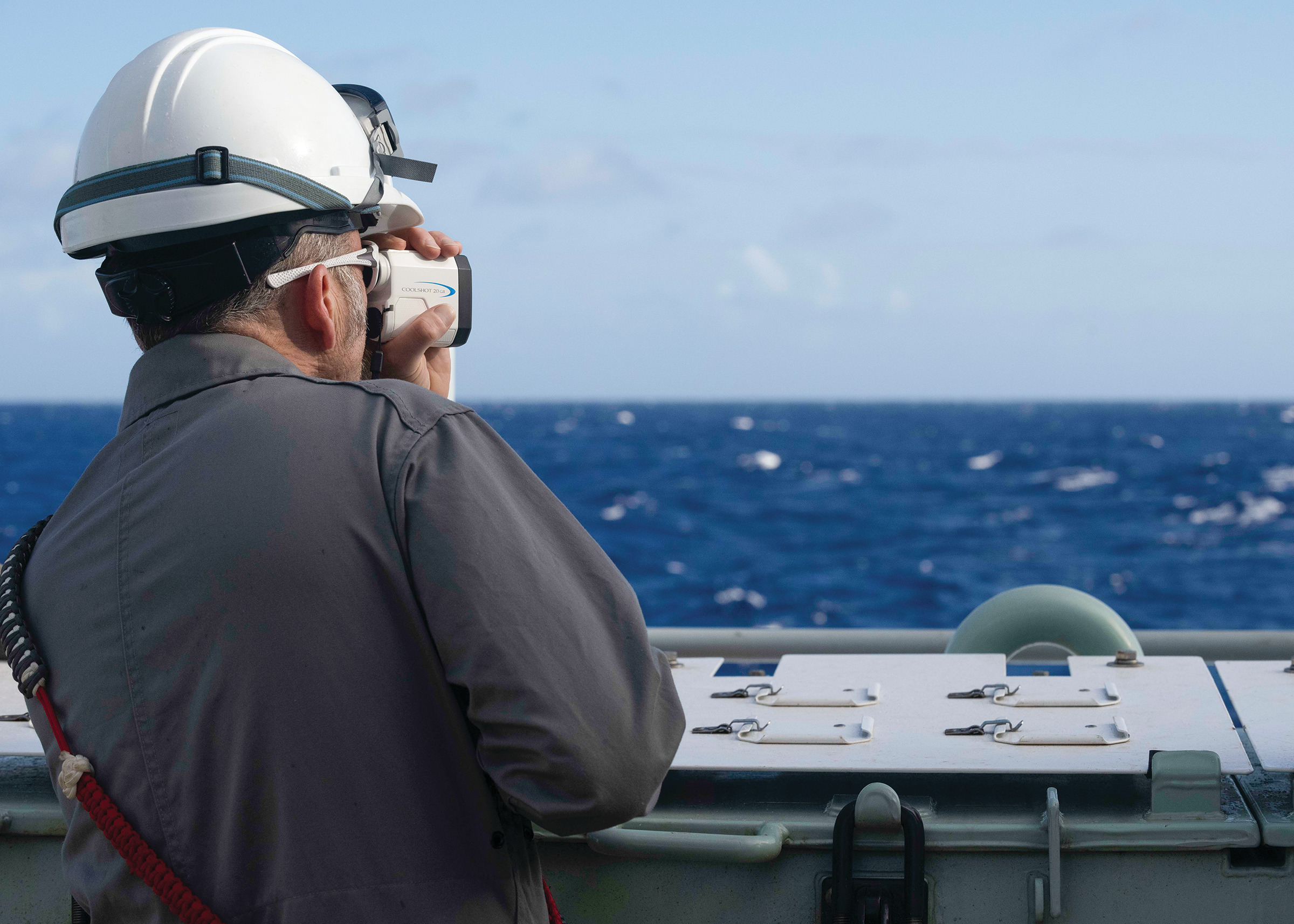
Photo: Master Sailor (MS) Marilou Villeneuve-Last
Chief Petty Officer 1st Class (CPO1), also Coxswain (Cox’n) of Motor Vessel (MV) Asterix, watches a Replenishment at Sea (RAS) in the East China Sea on November 5, 2023.
While less trying than sea duty, all three individuals present shore duty as creating unique opportunities. One of the most surprising revelations from their narratives was the concept of the CPO—and in some cases the PO1—as an intermediary not only between the NCM Corps and officers but between the military personnel and civilians. While serving as a drill instructor at Royal Roads, PO1 Yates found himself acting as the liaison between the officer cadets and the civilian laundry service to ensure that uniforms were laundered according to military standards.Footnote 46 As base financial counsellor, Wierenga often assisted military spouses struggling with financial issues or unsympathetic landlords while their spouses were at sea.Footnote 47 Wierenga also had to intervene if sailors neglected to make pay assignments to their spouses. In this case, the paycheque would be delivered to the deployed sailor, leaving the spouse without money. Wierenga could authorize short-term assistance for the spouse until the sailor made alternate arrangements.Footnote 48 Jaquemot explained how in his role as the Fleet Chief, his involvement with outside organizations included the Military Family Resource Centre, helping to extend support to military spouses and their children. Each of these instances reveals a fascinating aspect of CPO duties that has so far been neglected in the literature. Incorporating the CPO’s involvement with civilians and civilian organizations into the available literature significantly expands the breadth of CPO responsibilities and roles. CPOs as intermediaries both within and outside of the military realm is an area worthy of further study.
The richness of these narratives is especially apparent in the recollections of their careers. While the literature does not consider the CPO as an individual, personal narratives offer a glimpse at how CPOs view themselves and their expansive careers. When asked if there was a story from their careers that they particularly enjoyed telling, all three narrators shared stories from long before they became CPOs. Without implicating anyone, Wierenga spoke to the pranks and playfulness of sailors; a sign “for sale” was painted on the hull of another crew’s ship on more than one occasion, and in another case, the helm of a sea-ready ship was temporarily stolen.Footnote 49 Yates recounted his epic tot time dive (the Maritime Command was still issuing the two and a half ounces of rum known as “the tot”) from HMCS Oriole to catch a humongous glass fishing float, which, unfortunately, the Captain kept for himself. Footnote 50 Jaquemot was especially proud of being selected to be part of the flag party during the fiftieth anniversary of the Second World War Commemorations in the Netherlands and Russia.Footnote 51 Each of these stories helps to supplement the literature on CPOs within the organizational hierarchy of the RCN by emphasizing the unique individual experiences of particular servicemembers.
Conclusion
Oral history offers a wealth of possibilities for understanding the roles and responsibilities of Chief Petty Officers in the RCN. Previous organization-level approaches to understanding the role of CPOs have aimed to highlight the need for additional CPO leadership models, elucidate the relationship of CPOs to commissioned officers, and emphasize the increasing strategic responsibilities of CPOs. As such, this literature is well suited for the internal use of the RCN and for placing the CPO within an organizational hierarchy. However, it is incomplete without the recollections of individual CPOs to add colour, context, and important background to the position. By drawing attention to where the oral histories of three CPOs confirm, contradict, and expand on the existing literature, a fuller picture begins to emerge.
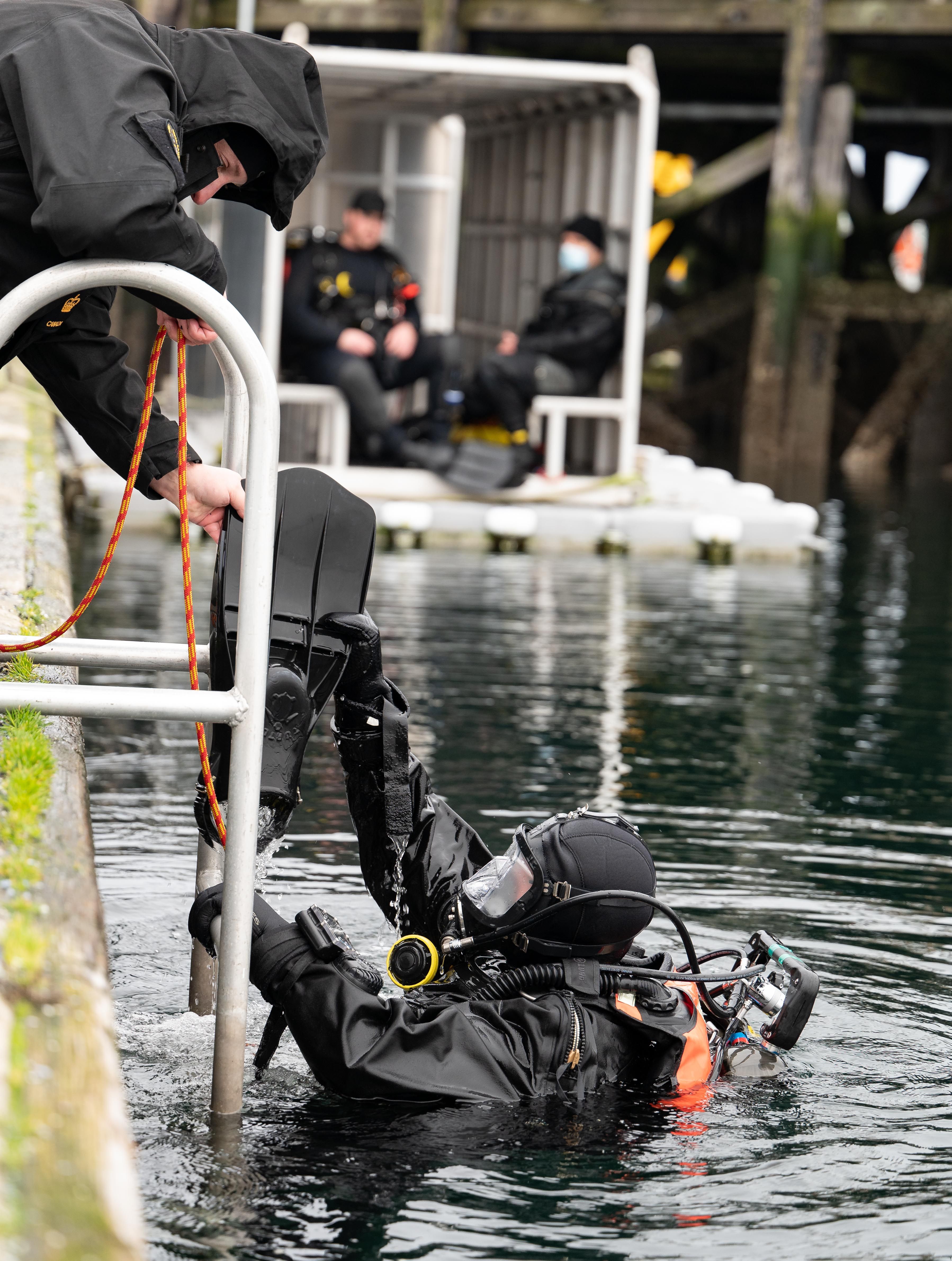
Photo: Sailor 1st Class Valerie LeClair
A Chief Petty Officer 2nd Class (CPO2) completes his first CABA (Compressed Air Breathing Apparatus) Lite dive during a Naval Reserve National Dive Exercise at the Royal Canadian Navy’s Cadet Training Center in Comox, British Columbia, January 27, 2022.
Furthermore, the reality of CPOs often differs from how they are portrayed on paper. For example, all three CPOs emphasized managerial responsibilities over the socialization of junior sailors. Further, each had acted as an intermediary between military personnel and civilians at one time or another. Both of these instances seem to indicate that published studies must expand their understanding of how CPOs actually function within the RCN. Rooting an evaluation of the CPO’s role in the specifics of the job rather than its location within the RCN’s organizational hierarchy creates a better understanding of the role of CPOs, which can also be appreciated by civilians without organizational knowledge of the RCN. Fostering a broader understanding of the role of CPOs may also help encourage further literature on Petty Officers, a vastly understudied group.
Finally, this approach is also valuable for enhancing the organization-level literature. An individually oriented approach to understanding the responsibilities of CPOs—whether by conducting interviews, developing surveys, or finding other means for individual engagement—illuminates precisely how the experiences of CPOs are in accordance with or differ from expectations outlined by official orders and directives. Uncovering these confirmations and contradictions is crucial for developing effective leadership training programs that prepare NCMs to meet challenges in a rapidly evolving security environment. One especially noteworthy contribution to the organization-level literature is that each narrator referenced the PO1 rank as a pivotal moment in their development as a senior NCM prior to promotion into the chief spectrum. By identifying PO1 as a formative rank in the cultivation of both CPO2s and CPO1s, it is worth considering whether the development of strategic CPO1s might actually begin at the PO1 level rather than exclusively as a CPO2. Lastly, by supplementing the organization-level approach with the perspectives of individual CPOs, it is possible to define the boundaries of the role of CPOs in the RCN while also appreciating the rank as the final milestone in an illustrious naval career.
Appendix A
Interview Questions
Background Questions:
- Can you tell me about your childhood and where you grew up?
- Where did you go to school?
- What led you to consider a career in the navy?
- What was your final rank?
- Could you talk a little bit about your career path in the navy?
- What is a Chief Petty Officer?
CPO Basics:
- What were your duties or responsibilities as a CPO?
- How different are the duties of a Chief Petty Officer Second Class versus a Chief Petty Officer First Class?
- What would a typical day look like for you as a Chief Petty Officer?
- Did your duties as a CPO vary significantly depending on whether you were on sea duty or shore duty?
CPO Specifics:
- Some articles highlight the role of the CPO as a mentor. Did you often take on a mentorship role?
- How were you involved with the education or training of junior sailors?
- How were you involved with the education or training of recently commissioned officers?
- Describe your relationship with commissioned officers.
- One article from the Canadian Military Journal suggests that CPOs play a large part in socializing new sailors to navy culture. Do you find this to be the case?
- How are new sailors socialized?
Recollections:
- Is there a story from your naval career that you particularly enjoy telling?
- Is there anything about your time as a CPO you want to highlight? Notable events?
- What are some of your most memorable appointments or positions in the RCN?
- Is there anything else you would like to discuss?