


Photo: Canadian Forces Combat Camera, DND
Sailors from Her Majesty's Canadian Ship Fredericton wave to the Italian Ship Aliso during Operation REASSURANCE on March 10, 2015.
“Sometimes your joy is the source of your smile, but sometimes your smile can be the source of your joy”
Lobna Chérif, PhD, CAPP, CRT, PPCC, MBSP is the Founder and Director of the Resilience Plus program at the Royal Military College where she is an Associate Professor at the Department of Military Psychology and Leadership and where she also holds the Chair in Resilience. Dr. Chérif’s current research focuses on character strengths, mindfulness, resilience, and accomplishment—and how to apply this understanding to improving well-being and performance.
Valerie Wood is a Research and Evaluation Specialist within the Canadian Forces Health Services Group. Her previous research has focused on the role of adult attachment in relationship conflict and spousal adjustment to military deployments, relationships and public health, and the well-being and resilience of military recruits and members.
Lt Stan Parnell is a Personnel Selection Officer at Personnel Development (PDev), Personnel Support Services (Ottawa- Gatineau). Lt Parnell has an interest in how practising positive psychology can contribute to the quality of life and mental resilience of CAF members.
Positive Emotions and Resilience
The stress imposed by the COVID-19 pandemic is a nearly unavoidable challenge, which highlights a need to address these stressors head-on. While several factors have been identified as significantly contributing to psychological resilience during the pandemic, the increased experience of positive emotions is one contributor that is less susceptible to the constraints of COVIDrelated restrictions, relative to others such as physical exercise (e.g., Sun et al., 2020). Indeed, the experience of positive emotions is associated with a resilient mindset (Israelashvili, 2021). Increasing the experience of positive emotions is effective for building resilience and buffering the impacts of stress, not just at a cognitive level but also at a neurobiological level (Hamilton- West, 2010). Emotional states that are of high intensity or arousal, and are high in their hedonic content (i.e., pleasure) are most relevant for resilience (Cabanac, 2002; Fredrickson, 1998; 2001; 2013). Specifically, the positive emotions of joy, gratitude, serenity, interest, hope, pride, amusement, inspiration, awe, and love have been found to dampen our reactivity to stress (Ong et al., 2006) and enhance our ability to cope with stressful life events (Tugade et al., 2004).
It was previously thought that positive emotions were useful in mitigating the effects of acute crises (see Fredrickson et al., 2003); however, more recent work on positive emotions during the COVID-19 pandemic indicates that they can also build resilience in more prolonged stressful situations. Thus, there is a need for more self-directed interventions that encourage the leveraging of positive emotions in our daily lives, to combat the stress of COVID-19, and bolster our resilience.
We have developed a tool for promoting positive emotions and thus boosting our resilience. R.I.S.E. is an acronym that stands for Recognize, Investigate, Savour, and Enhance and represents the four steps of a mindfulness-based practice for leveraging positive affectivity. Grounded in Buddhism, mindfulness is understood as increased awareness resulting from increased attention to the present moment and lack of judgment (e.g., Kabat-Zinn, 1994). In this context, non-judgment refers to being open and accepting of various thoughts, emotions, and sensations. A growing body of research overwhelmingly indicates the effectiveness of mindfulness practices in increasing the amount and degree of positive emotions that individuals feel on a dayto- day basis (e.g., Davidson et al., 2003; Ryan & Deci, 2001) and contributing to resilience and our physical and mental well-being (e.g., Keng et al., 2011).
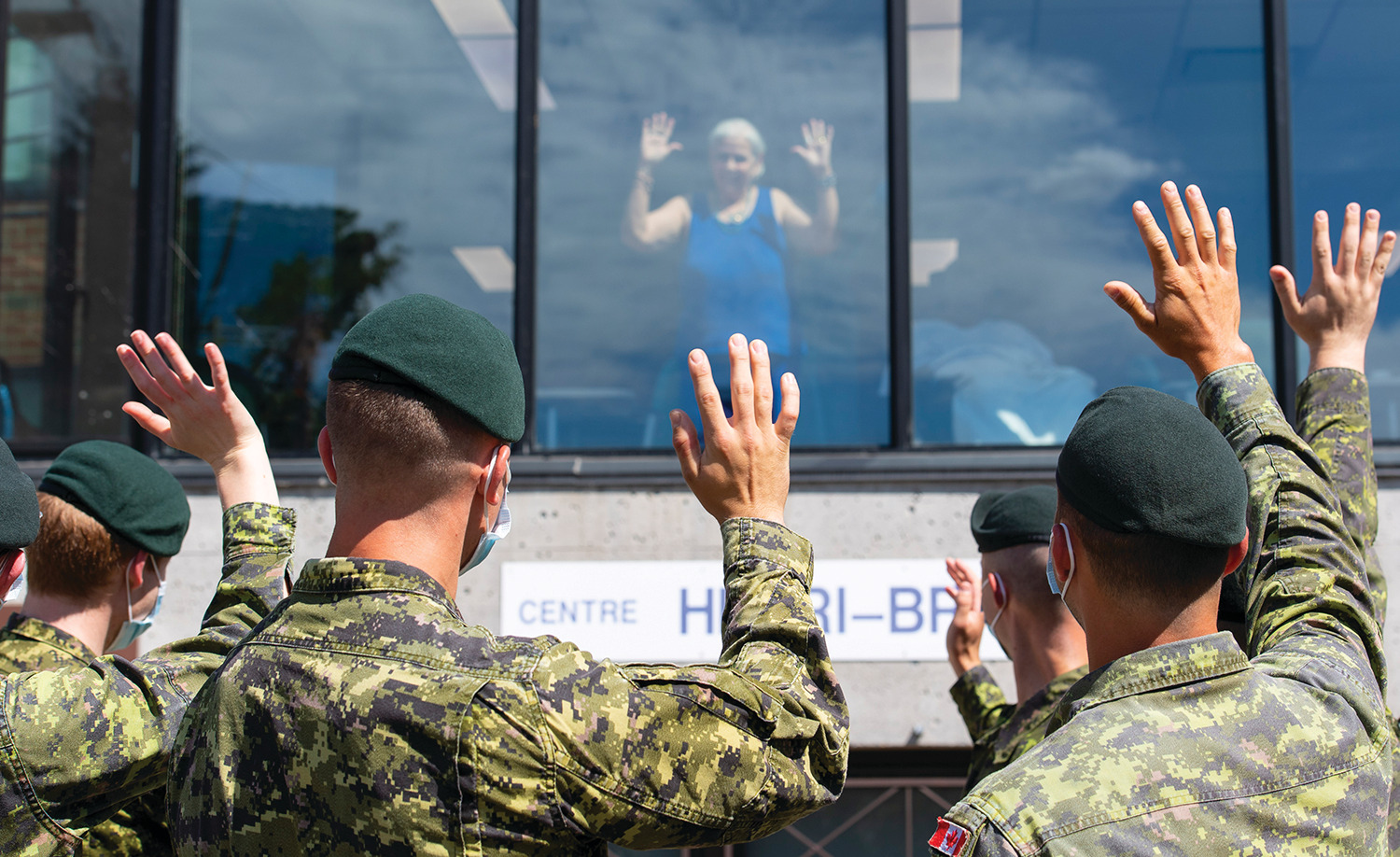
Photo: Corporal Marc-André Leclerc
Soldiers from the Royal 22e Régiment wave to a patient as they leave the Henri-Bradet long-term care centre (CHSLD) in Montreal, Quebec during Operation LASER on June 19, 2020
How Positive Emotions Enhance Resilience
Other than simply feeling good, how does the experience of positive emotions enhance resilience? Positive emotions are thought to perform an adaptive cognitive function in broadening our thought-action repertoires or by expanding our list of possible thoughts and associated actions in a given situation. In contrast, negative emotions tend to narrow our mindsets (such as fight or flight in response to fear). For example, think of a child engaged in free play, which triggers the emotion of joy. Social play may help develop social-affective skills, rough-and-tumble play may develop physical skills, and object-related play may help develop cognitive skills. Indeed, through play and exploration, positive emotions broaden our abilities and thought processes, and builds resources like skills and neuro-connections, which in turn contributes to our good health and overall functioning (Folkman, 1997; Fredrickson, 2004). While the thought-action repertoire is a momentary tendency, the psychological resources that positive emotions help develop are long-lasting and can be recalled for future use (Fredrickson, 2004). Indeed, positive emotions help us acquire resources that contribute to personal transformation as we become more creative, knowledgeable, and resilient (Fredrickson, 2004). Ultimately, this broaden-and-build theory suggests that positive emotions are antecedents of optimal functioning, and that they are not merely the emotional projection of optimal functioning.
Positive Emotions and Resource Acquisition
The following are descriptions of the 10 most frequently experienced positive emotions, from the most frequent to the least frequent. Each has a trigger, thought-action repertoire, and physical or psychological resource that is developed (Fredrickson, 2013).
Love is triggered when another positive emotion is felt in the context of a safe relationship. Love strengthens social connections, leads to self-expansion, and builds resources such as social support, cohesion, and a sense of community.
Joy arises from unexpected good fortune, such as receiving good news or a pleasant surprise. Joy promotes playfulness and involvement in opportunities. Joy develops physical and psychological skills associated with the relevant activity (through play and participation).
Gratitude is triggered when we acknowledge that someone is the source of our good fortune. In other words, joy is the antecedent of gratitude. Gratitude creates an urge to reciprocate that kindness and develops skills including the generation of new ideas for expressing gratitude and kindness to others, the strengthening of social support, and other relationship indicators.
Serenity is experienced when we perceive our circumstances as satisfying and cherished. When serene, we are at ease and are comfortable in our current situation. Serenity creates the urge to savour the moment, helps to develop this capacity, and highlights our priorities.
Interest blossoms when something is perceived as both safe and novel. Something new, unique, or challenging, but not overwhelming, tends to pique our interest. Interest creates an urge to explore and learn, with knowledge gained from acting upon our interests and acquiring resources.
Hope is exceptional in that it, ironically, arises under negative circumstances. People experience hope when they are in dire straits yet envision the occurrence of a positive outcome. Hope encourages us to be innovative or creative when developing solutions to problems we face and helps develop optimism and resilience.
Pride results from taking at least partial credit for something that is socially valued. Pride encourages goal setting for even greater accomplishments in similar fields, develops skills that help us reach our goals, and contributes to achievement motivation.
Amusement is triggered when we observe a noticeable but non-serious mishap in a social context. For example, watching a friend walk into a glass door can bring us amusement if we perceive the blunder to be harmless. Amusement creates an urge to experience and share laughter and joy, which helps to build and strengthen social bonds.
Inspiration is experienced when we bear witness to human excellence such as observing a great act of self-sacrifice or being in awe of unimaginable skill. Inspiration motivates us to excel in response and facilitates personal growth.
Awe is triggered when we are overwhelmed by beauty, excellence, greatness, or power. For instance, we may feel in awe when witnessing role models that we deeply admire. Awe allows us to savour and appreciate the world around us and contributes to the development of new worldviews and consideration of differing perspectives.
How Mindfulness Enhances Resilience
Mindfulness, resilience, and well-being are intimately connected (e.g., Pidgeon & Keye, 2014). Mindfulness is specifically thought to contribute to resilience through the mechanisms of self-control and emotion regulation (e.g., through reducing amygdala activity which decreases fear and anxiety; Loos et al., 2020). Mindfulness also enhances our physical health, by decreasing stress reactivity and helping to mitigate against the ill effects of burnout. Several studies have found that mindfulness practices are associated with reduced rates of burnout, making it a useful work-related resource to cultivate (Cohen-Katz et al., 2005). In addition to preventing burnout, mindfulness can be an effective resource for reducing emotional exhaustion, cynicism, and the loss of professional efficacy (Taylor & Millear, 2016). The utility of mindfulness in organizational settings is apparent; it helps reduce the employee’s susceptibility to burnout and enhances their well-being.
A growing interest in the use of mindfulness-based interventions likely stems from their effectiveness in helping individuals become less reactive to, and stronger in the face of, stressors (Spijkerman et al., 2016). A meta-analysis of 15 online mindfulness- based interventions found substantial positive impacts on depression, anxiety, and management of other stress-based outcomes (Spijkerman et al., 2016). A further benefit of mindfulness is that these practices blend East Asian and North American cognitive behavioural practices (Hofmann & Gomez, 2017). This blending of cultural practices could potentially improve their universality and receptivity.
R.I.S.E. to Resilience
R: Recognize your positive emotions. Pay careful attention to what is happening in the present moment. Take a step back, pause, and observe the situation more holistically (the bigger picture).
I: Investigate your inner experience. Explore your positive thoughts and sensations with curiosity and openness. “I think I am feeling _____. What is it about this person’s behaviour/this experience that makes me so _____? Why is this so important to me?”
S: Savour and appreciate the positive emotions and current situation. Stay in this experience for at least 30 seconds without getting distracted by something else. Research shows that savouring is linked with greater subjective well-being (Smith & Bryant, 2017). Specifically, some documented benefits of developing and using an increased savouring ability include greater perceived emotional control (Bryant, 2003), reduced depression and anxiety (e.g., Borelli et al., 2015), increased disclosure of positive events to one’s partner, and improved relationship quality (Pagania et al., 2015).
E: Enhance your felt experience of these positive emotions. Bryant and Veroff (2007) distinguish specific strategies for enhancing positive emotions during positive events, including memory building (intentionally creating a memory for that event by taking a mental picture), sharing with others (including others in the experience allows the positive emotions to be reciprocated, which allows others to benefit from it), sensory-perceptual sharpening (exploring that event in more perceptual detail), absorption (promotes the sensation of slowing down), and counting blessings (increasing felt gratitude). In addition, it is important to avoid killjoy thinking which includes efforts to downplay or devaluate the positive experience.
Why You Should R.I.S.E
Positive emotions play a critical role in broadening our minds and building our resources. They promote creativity, social connections, personal resources, and resilience. As we enter the COVID-19 post-pandemic era, the experience of positive emotions can be an effective mechanism for nurturing resilience. The experience of positive emotions is positively linked with a resilient mindset, even in periods of prolonged stress like that experienced during the pandemic. Resilience is also strengthened by mindfulness practices that reduce the reactivity of our amygdala and develop our stress management.
When you R.I.S.E., you are capitalizing on both the benefits of leveraging positive emotions and engaging in mindfulness-related practice. By being wholly attentive to our present experience, we can appreciate, savour, and prolong positive engagement with our physical and social worlds, and contribute to our subjective well-being. We also gain plenty of opportunities to broaden our skills and experiences, and build key resources needed when times get tough in the future. We encourage you to R.I.S.E. to the challenge and cultivate positive emotions in your personal and professional lives.
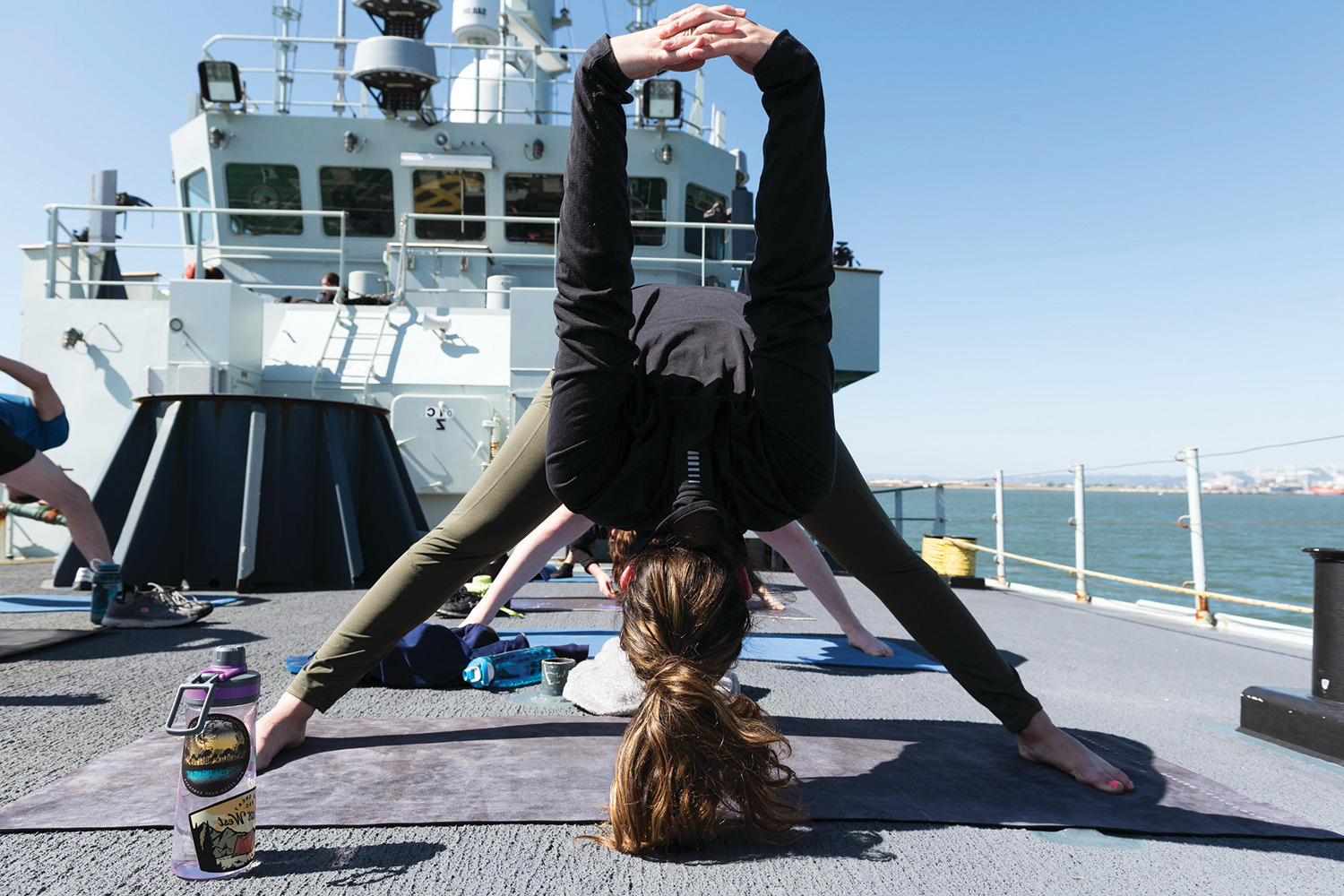
Photo: Canadian Armed Forces photo
Crewmembers aboard HMCS WHITEHORSE participate in a yoga class during Operation CARIBBE on April 2, 2020.